Who Pays for Module Damage During a Florida Crane Set?
A damaged module can stop your coastal installation while several parties dispute the repair bill. Payment for crane set damage depends on the cause, the contract, and the applicable insurance , not simply who operates the crane.
You may need temporary protection or structural repairs before responsibility is settled. The first step is separating who must organize the response from who ultimately owes the money.
Who pays for crane set damage?
No party automatically pays for every damaged module during a Florida crane set. The installation agreement, crane contract, evidence, and insurance terms determine the outcome.
Responsibility for causing the damage
A crane contractor may be liable for damage caused by negligent crane operation. An installation contractor may be responsible for improper rigging, placement, or connections within its assigned work.
However, damage discovered during lifting may have existed before the lift. A foundation conflict, inaccurate lifting information, or unsuitable ground conditions may also involve parties beyond the operator. Timing alone doesn't establish fault.
Responsibility under the contract
The agreement may assign responsibility for protecting modules during unloading, temporary storage, placement, and structural completion. It may also assign repair duties before the parties resolve fault.
For a Florida Keys project, those handoffs should be explicit. Our guidance on installer and contractor responsibilities describes how crane coordination and installation duties fit together.
Which party may owe the repair cost?
The damaged component and the work underway help identify the relevant responsibility. However, the evidence must connect that work to the loss.
These are possible responsibility paths, not automatic payment rules.
| Damage circumstance | Potentially responsible party | Important evidence |
|---|---|---|
| Module strikes an obstacle during lifting | Crane contractor or party directing the lift | Lift plan, signals, clearances, and incident footage |
| Rigging damages a structural or finished surface | Party responsible for rigging | Rigging arrangement, contact points, and lifting instructions |
| Module lands on incorrect bearing locations | Installer, foundation contractor, or design party | Approved drawings, surveys, and placement records |
| Damage exists before unloading | Party responsible for the earlier handling stage | Arrival photographs and delivery records |
| Rain enters during an installation pause | Party assigned temporary protection | Protection scope, photographs, and weather timeline |
Several parties can contribute to one incident. For example, the operator's actions and the site's prepared conditions may both matter.
Also, coordinating modular home installation doesn't automatically make a contractor responsible for every other company's mistake. Contract terms and actual conduct still matter.
The first repair payment may come through project property insurance or a contractual repair obligation. Later reimbursement can differ. Keep immediate protection costs separate from the final allocation of liability.
Insurance coverage and liability are separate questions
Insurance can fund a covered loss without first resolving every disagreement about fault. Conversely, a party can owe damages even when its insurance doesn't cover them.
Coverage for the module itself
Builder's risk, installation floater, or inland marine coverage may insure modules during specified project stages. The policy must actually cover the property, location, activity, and cause of loss involved.
Transit, unloading, lifting, temporary storage, and completed placement aren't necessarily treated alike. Exclusions and endorsements matter, as do deductibles.
On a Naples project, the claim timeline should identify when the damage happened. That helps distinguish a lifting incident from an earlier handling loss or later weather exposure.
Coverage for a contractor's liability
A contractor's liability policy addresses covered legal liability, subject to its terms. A care, custody, or control exclusion can affect coverage for property the contractor is handling.
A certificate of insurance doesn't establish that a particular lift or module loss is covered. It summarizes insurance information without replacing the policy and endorsements.
A repair obligation in a contract and an insurer's obligation under a policy are separate promises.
Florida Statutes § 725.06 also limits certain construction-contract indemnity provisions. A broad clause doesn't automatically transfer every loss.
Elevated concrete can change the damage investigation
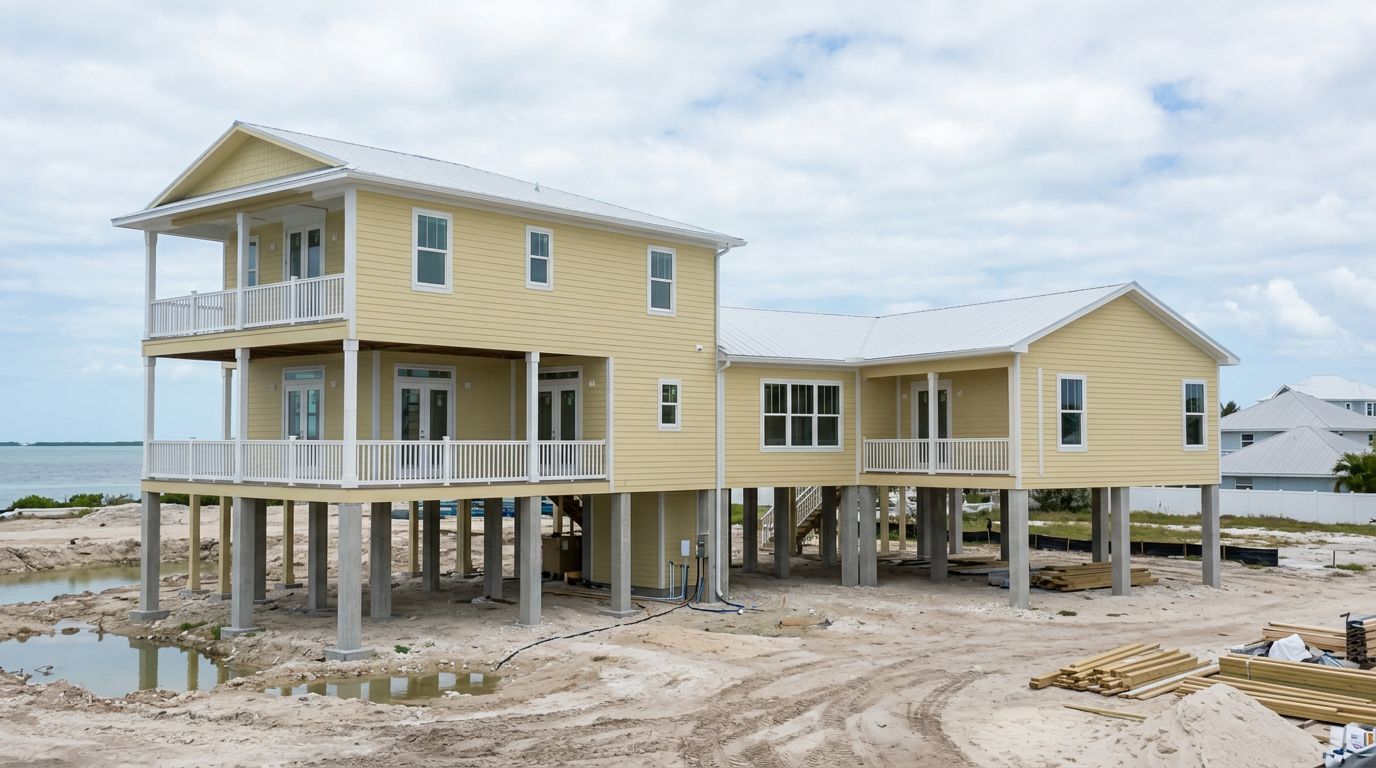
An elevated coastal home depends on accurate support geometry and a workable lift plan. The crane cannot compensate for misplaced bearing points or unsuitable concrete supports.
Foundation readiness affects placement
In Fort Myers, elevated columns, beams, and modular-ready support systems must match the approved structural layout. Concrete must reach the required condition before it receives the installation loads.
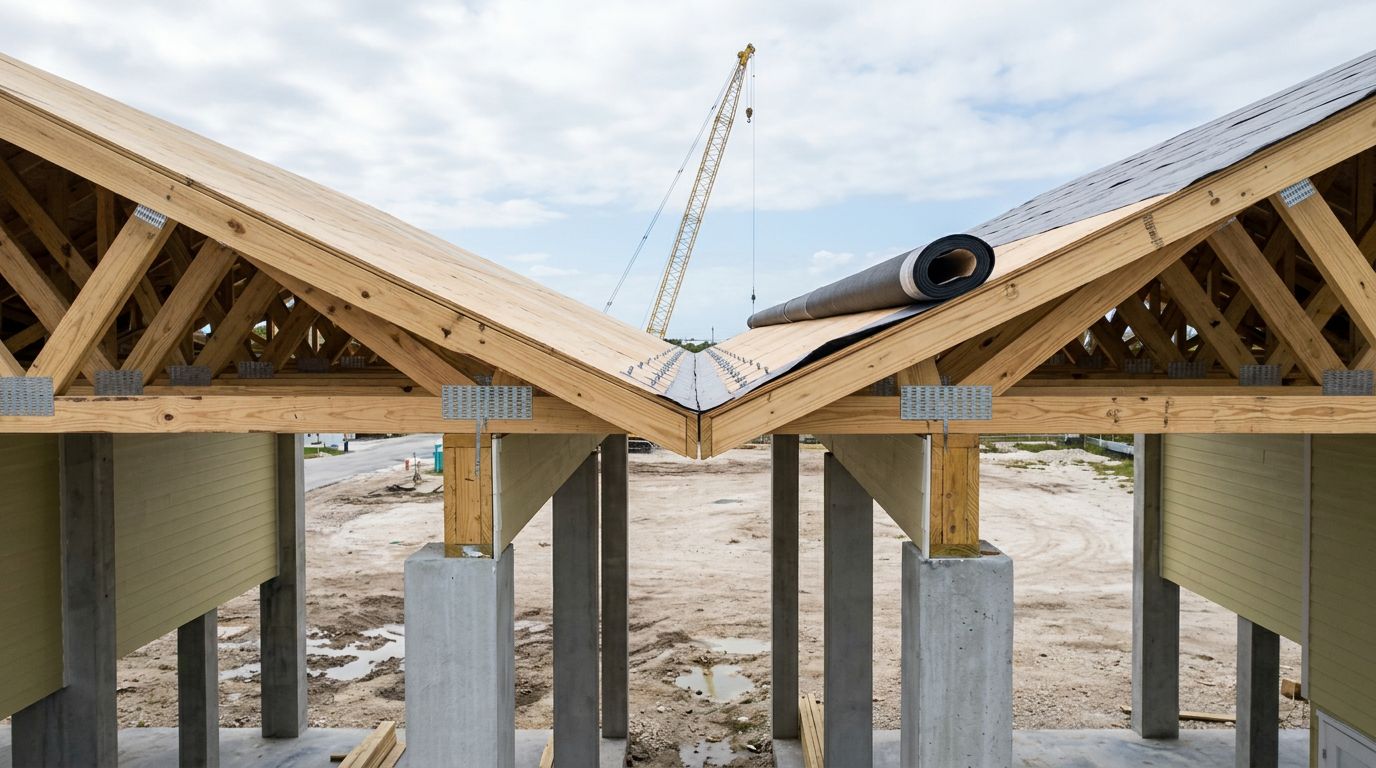
Elevation, bearing locations, and connection details all affect how a module lands. If a section binds, twists, or lacks intended support, the investigation must address the foundation and placement process.
Structural concerns require direction from the responsible engineer before crews improvise corrections.
Access affects the lift
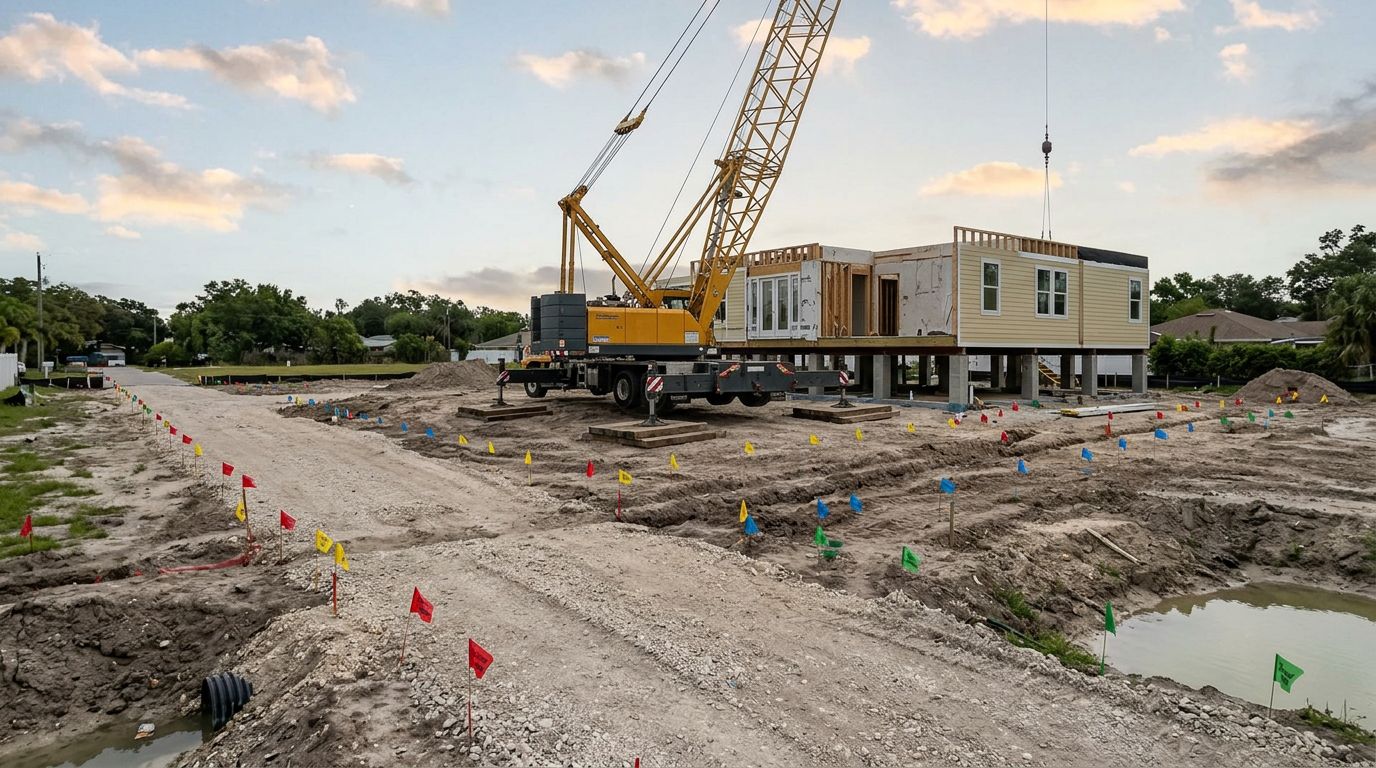
Sarasota waterfront sites can combine narrow access, nearby structures, and limited staging. Crane radius, placement height, overhead clearance, and outrigger support all influence the operation.
At Mod Tech Construction, we coordinate access, staging, crane position, rigging, set sequence, module alignment, and structural connections. We plan our concrete work around the final set.
Our explanation of modular crane lift planning shows why the structure and equipment plan must agree before lifting starts.
The set-day record establishes when damage occurred
Good records help distinguish pre-existing damage from a lifting incident or a post-set problem. They also give engineers and insurers a usable account of events.
Record the condition before lifting
Photograph each module before unloading, including accessible corners, framing, finishes, and visible connection areas. Identify the section and photograph any existing concern closely enough to show its location.
Keep arrival records with the images. A signed delivery document and a photograph answer different questions, so neither should replace the other.
Our guidance on documenting damage before the lift covers the condition record and decisions about suspected damage.
Record the incident without assigning blame
On a Tampa installation, preserve the lift sequence, crane location, rigging arrangement, weather conditions, and communications relevant to the event.
Record what people observed rather than declaring who caused it. Also retain photographs of bearing points and nearby obstructions.
For a paused modular home setup, continue documenting protection and conditions. Water entry after the incident may create a separate issue with different responsibilities.
What to do immediately after module damage
The response must protect workers and the structure without destroying useful evidence. A suspended or unstable module requires the lift team's safety procedures, not an improvised homeowner intervention.
- Stop the affected operation. Keep people clear while the crane operator and lift lead establish a safe condition.
- Document the damage. Record the module, location, time, visible condition, and stage of the lift.
- Notify the assigned contacts. Send written notice to the project lead, relevant contractors, and applicable insurers under their notice requirements.
- Obtain structural direction where needed. Damage to framing, bearing areas, or connections may require engineering review before movement or repair.
- Protect exposed areas safely. Photograph temporary protection and retain receipts, work records, and damaged materials where practical.
Necessary emergency measures shouldn't wait for a final liability decision. However, permanent repairs need an authorized scope and supporting documentation.
Our set-day communication plan identifies the decisions and contacts that keep a stopped set organized.
OSHA's construction-crane rules are in 29 C.F.R. Subpart CC. Safety duties and financial responsibility remain separate questions.
Put repairs, deductibles, and handoffs in writing
A practical installation agreement identifies responsibility at each stage: arrival, unloading, lifting, bearing placement, structural connections, and temporary weather protection.
It should also identify who coordinates emergency repairs, who can authorize permanent work, and how disputed costs are handled. Crane standby, engineering review, temporary protection, and repair labor should appear separately in the cost record.
For Gulf Coast communities with elevated coastal structures, the handoff cannot rest on "the module is on the foundation." Placement may precede alignment, anchoring, marriage-line sealing, and other structural completion.
Insurance deductibles and uncovered costs also need an allocation. The party paying initially may seek reimbursement later, depending on the agreement and established liability.
Florida's indemnity rules can affect these terms. An attorney can address disputed obligations or draft provisions for a complex elevated project.
Separate authorization from blame: a written instruction to protect or repair the structure should clearly state how payment will be handled.
Key takeaways
- The crane company doesn't automatically pay for every damaged module.
- Contracts, evidence of cause, and policy wording determine the available payment paths.
- Elevated supports and site conditions can matter as much as crane operation.
- Document arrival conditions, protect the structure, and keep repair authorization separate from the final liability decision.
Frequently asked questions
Does the homeowner have to pay first?
Sometimes the owner's project policy or contractual obligation funds repairs initially. That doesn't settle ultimate responsibility. A covered insurer may pursue recovery from a responsible party through subrogation, subject to policy terms and contractual waivers.
Does a qualified crane crew eliminate damage liability?
No. OSHA requires covered operators to meet applicable training, certification or licensing, and evaluation requirements. Riggers must be qualified for their assigned tasks; OSHA doesn't require third-party certification for every rigger. Qualifications support safe work but don't decide who pays.
Who pays if wind interrupts the set?
A weather delay and physical damage are separate cost questions. The contract may allocate standby and postponement charges. Responsibility for damaged modules depends on the cause, protection duties, and applicable coverage, including relevant weather exclusions.
A clear damage response protects the installation
Crane set damage requires a documented response, not an assumption about who owes the bill. The strongest evidence connects the module's condition, assigned duties, and the event that caused the loss.
For an elevated Florida installation, clear handoffs matter before and after placement. Safe protection and authorized repairs can move forward while the contract, evidence, and insurance determine the final payment responsibility.
Recent Posts