Florida Modular Home Set Day: A Communication Plan for Builders
The crane can be ready while the set is still in trouble. If the foundation measurements, truck arrival order, or crane pad conditions have changed, someone needs to tell every affected crew before the first lift.
For a Florida modular home set day, clear decision ownership matters as much as a shared schedule. You need to know who can release deliveries, who can stop a lift, and who records a change to the plan. Start with the people and decisions that connect the site to the arriving modules.
Put one builder lead in charge of set-day communication
A busy site can have a general contractor, concrete crew, crane company, transport crew, installer, surveyor, and engineer involved. Give them one current contact list and identify the builder's field lead before anyone mobilizes.
Assign decisions, not just phone numbers
The field lead should collect status reports and distribute the agreed plan. Each specialist still owns decisions within their scope. The crane operator and lift team address lifting conditions; the engineer addresses design questions; the surveyor verifies elevations when the project calls for it.
Write down who confirms site readiness, releases trucks, schedules inspections, and approves changes to the planned work. If the builder and installer use different leads, state which one sends the final update to the whole team.
Match the message to the risk
Use a direct call or radio contact for an immediate safety concern. Follow it with a written record for everyone whose work changes. Routine updates can go through a shared message thread or daily field report, provided the people making decisions actually receive them.
Keep one drawing revision and one contact list in circulation. A driver following an old arrival instruction can block a tight site even when the set crew has the correct plan.
Confirm what "set ready" means before dispatch
A verbal "we're ready" leaves too much open. Set readiness should mean that the approved documents, physical site, people, and equipment have been checked against the planned lift sequence.
Check documents and inspection status
Before releasing deliveries, confirm that the installer has the approved plans, current site survey, foundation drawings, bearing and connection details, and any lift information the crane team requires. Ask the responsible party to confirm which inspections must occur before placement.
For a Fort Myers property, verify the governing jurisdiction rather than assuming every address follows the same permit process. Flood information can be checked through FEMA's Flood Map Service Center, but the engineer and local building department determine how applicable requirements affect the project.
Walk the site with the people who will use it
Check the truck route, staging area, overhead clearance, utility conflicts, drainage, and crane bearing location. Then compare field conditions with the access assumptions in the lift plan.
A pre-set walk is especially useful on restricted waterfront lots in the Florida Keys. Record unresolved items with an owner and a decision deadline. Don't release trucks against an open access or foundation issue and expect the set crew to solve it after arrival.
Connect elevated concrete checks to the lift plan
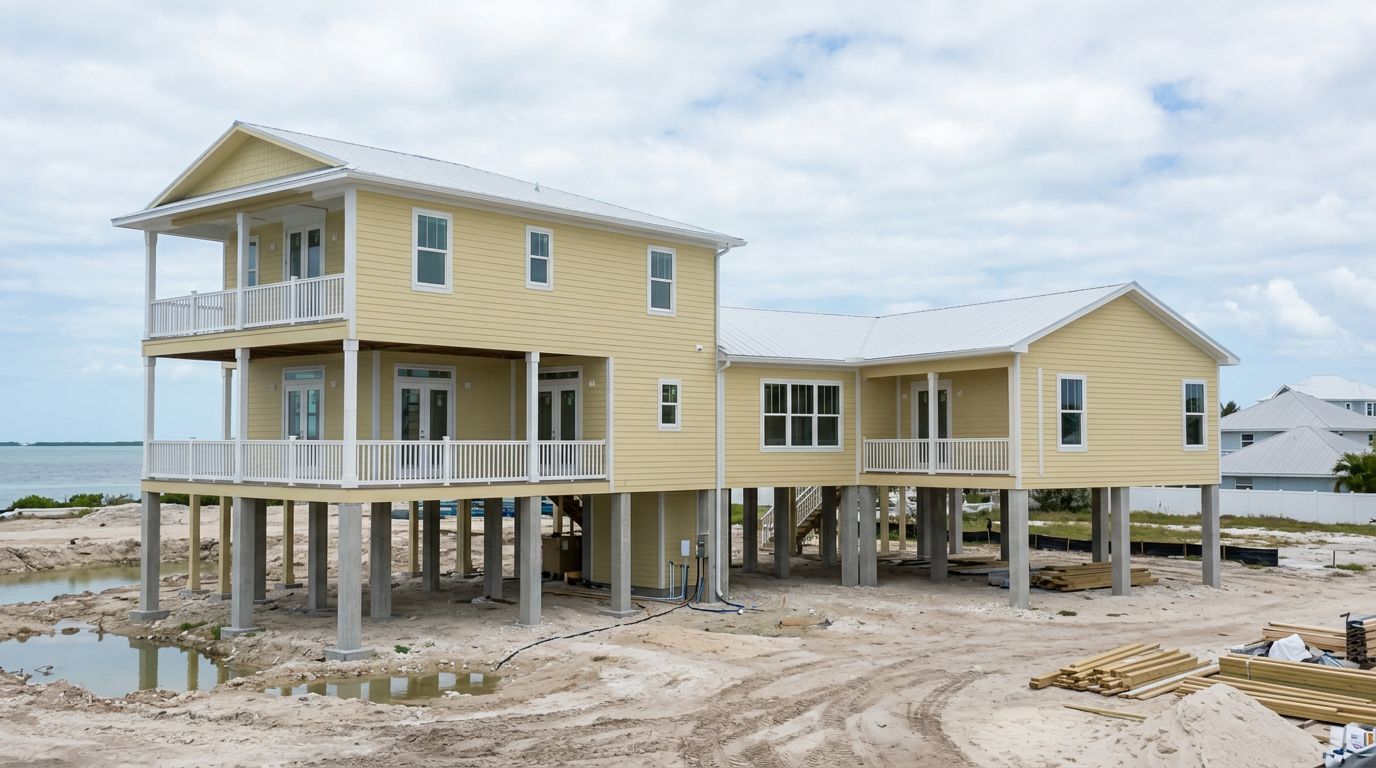
On coastal work, foundation completion and set readiness are related but separate milestones. Concrete can be in place while an elevation, bearing point, connection, or equipment-access question remains open.
Verify supports against the approved drawings
The responsible team should check column and beam locations, slab or support elevations, bearing surfaces, and connection points against the engineered plans. Confirm that concrete has reached the condition required for the next operation and that necessary inspections are complete.
Elevated foundations must meet the design for the actual parcel. Wind, flood exposure, soil, and connection details vary, so a foundation arrangement that worked in Naples cannot be assumed suitable in Key West. When measurements differ from the plans, route the discrepancy to the engineer before placement.
Protect the space needed to make the set
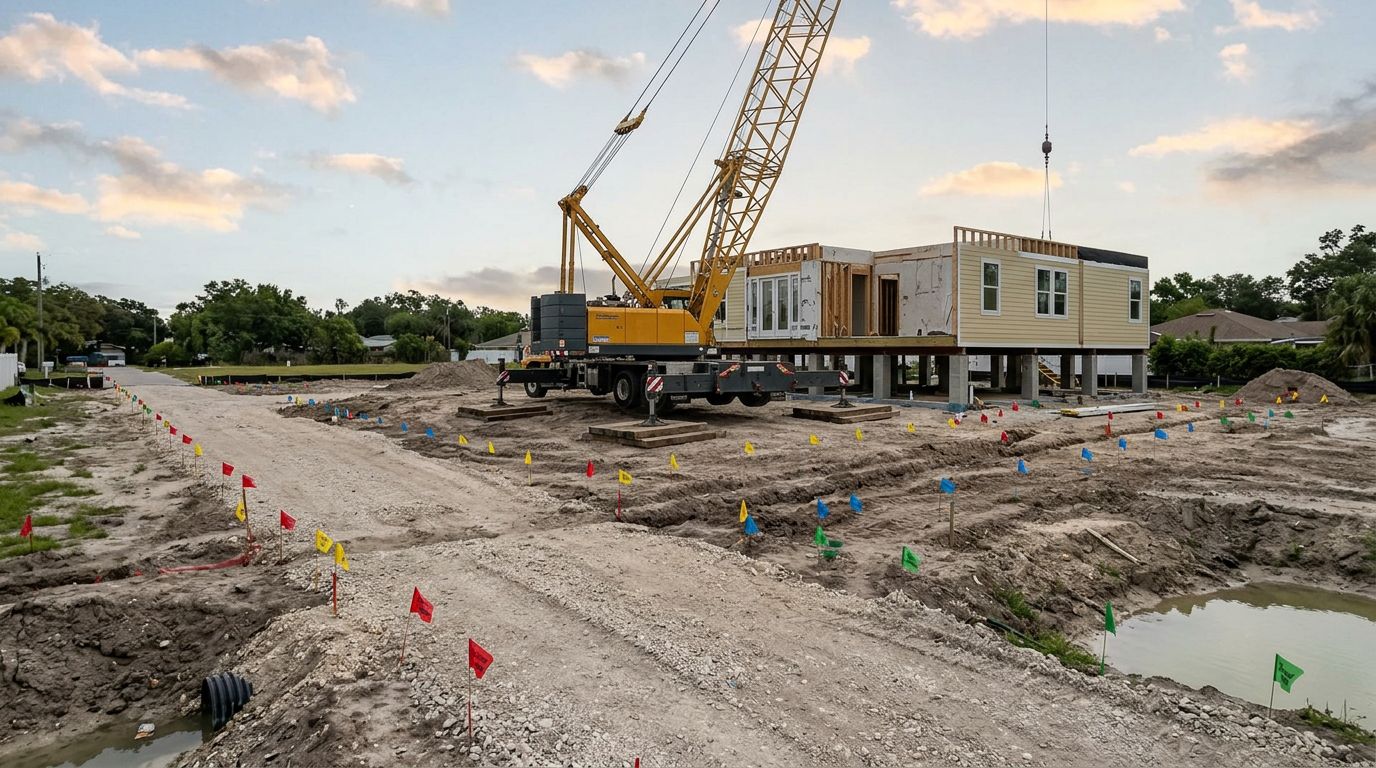
A concrete support system must also be reachable. Before staging a crane beside a canal or seawall, confirm where outriggers and delivery vehicles can safely stand. Wet fill, a narrow side yard, or excavation equipment left in the work area can change the lift approach.
Mod Tech Construction's structural concrete and modular installation work are closely connected for this reason. Builders need a foundation update that covers both structural readiness and the physical path to each planned bearing point.
Give transport and crane crews the same sequence
The crane team needs more than an arrival time. It needs the order of modules, planned pick locations, rigging information, expected crane positions, and a clear route between each truck and the foundation.
Confirm access before the first truck moves
Ask the transport coordinator to verify turning space, staging limits, overhead lines, and the point where drivers should wait for release. On narrow streets in Key West or other Florida Keys communities, also confirm who handles any required access arrangements.
Send the same instructions to drivers and the site lead. If a road becomes blocked or a staging area changes, hold the affected delivery until the crane and transport leads agree on the revised approach.
Make the first pick a formal hold point
Before lifting, the set lead should confirm that the correct module is present, the planned support area is clear, and the rigging and ground conditions match the lifting plan. The crane operator and lift team must be able to reject conditions they consider unsafe.
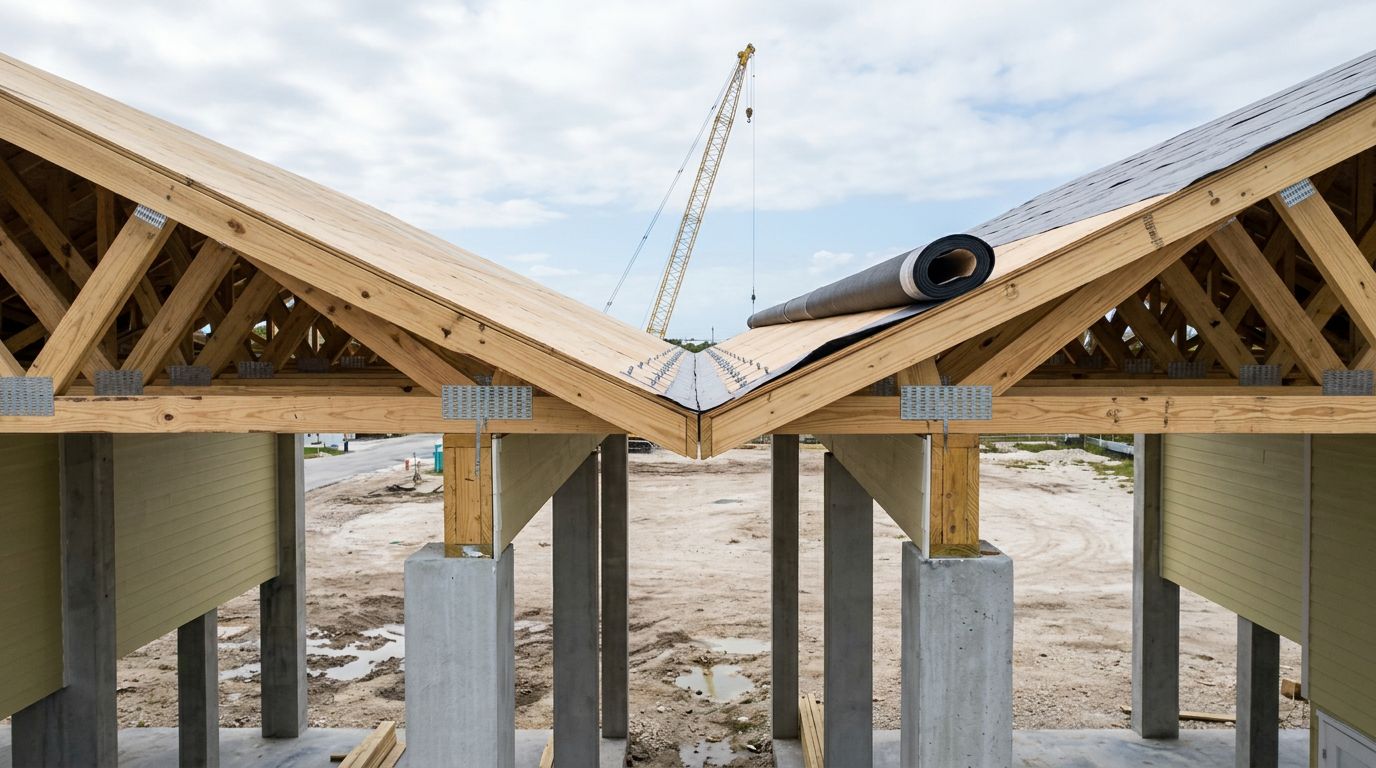
For a multi-section home in Sarasota, the placement order also affects alignment and marriage-line work. A sequence change should reach the installer, crane lead, and transport coordinator before the next truck enters the site.
Run a simple set-day update sequence
A set-day communication plan works best when updates attach to real decisions. Agree on the timing before the crew arrives, then use the same sequence unless site conditions require a change.
Send one go-or-hold message before delivery
Before dispatch, the field lead should collect confirmation on foundation readiness, access, crane area, weather, crew availability, and outstanding inspections. The resulting message should say whether the set is proceeding, held for a named issue, or postponed.
Once crews reach the site, hold a short briefing at the work area. Confirm the lift sequence, exclusion areas, communication channel, and who calls a stop. That briefing is also the time to check whether overnight rain changed the ground or access route.
Report each handoff, not every movement
Keep updates tied to points that affect another crew: a truck released, a module placed, a support or alignment issue found, or a lift sequence changed. The installer should tell the builder when structural connections and weather protection can begin.
This cadence helps a modular home setup in Tampa avoid crossed instructions. It also gives utility trades and inspectors accurate information about when their work can start, rather than an optimistic crane schedule.
Escalate changes before they become lift problems
Wind, heavy rain, saturated crane pads, blocked roads, and incomplete foundations can all interrupt a set. The plan should name the person who makes the next call and the people who must hear it.
Use this decision guide to assign project-specific contacts before set day:
| Change found | First contact | Decision to record |
|---|---|---|
| Unsafe lift or ground condition | Crane operator and lift lead | Stop or revise the lift plan |
| Foundation measurement conflict | Builder lead and engineer | Approved correction or hold |
| Blocked delivery access | Transport coordinator and builder lead | New route, staging plan, or delay |
| Inspection or permit question | Builder lead and governing department | Required clearance before work continues |
The table identifies conversations, not permission to improvise a field fix. For example, don't shim, relocate a bearing point, or change an anchor detail without the required design review.
If a set pauses, communicate the status of every module: still in transit, waiting at an approved location, or already placed. Then confirm how exposed connections and open areas will be protected while the team resolves the issue.
Close the day with a written handoff
Crane release doesn't mean modular home installation is complete. The builder needs a status report covering which sections were placed, where alignment stands, what connections are complete, and which areas need weather protection.
Record any temporary support, unfinished fastening, access restriction, or open engineering question. Assign each item to a person and identify the next inspection or verification point. Photos can help document conditions, but they don't replace required measurements or approvals.
For elevated coastal projects near Cape Coral and other Gulf Coast communities, confirm who arranges post-set elevation verification when the approved plans or local authority require it. A Florida-licensed surveyor or mapper typically prepares an Elevation Certificate when one is needed. The builder should also tell follow-on trades when the structure is ready for their work.
Key takeaways for builders
- Name one field lead to issue sitewide updates, while keeping technical and safety decisions with the responsible specialists.
- Release deliveries only after foundation, access, equipment area, documents, and inspection status are confirmed.
- Treat a change in ground conditions, module order, or support measurements as a decision that must reach affected crews before work continues.
- End the day with a written record of completed work, open items, and the next handoff.
Frequently asked questions
Who should tell drivers to proceed to the site?
Name that person in the communication plan. The builder's field lead or transport coordinator may handle the release, depending on the contract. Drivers should receive one clear instruction after the site team confirms access and the planned module order.
Can the set proceed if the foundation inspection is pending?
Don't assume it can. Check the approved inspection sequence with the governing building department and the project team before dispatch. The builder should communicate the answer to the installer, crane company, and transport coordinator so no one mobilizes on conflicting assumptions.
What should happen when weather changes during the set?
The crane operator and lift team should assess lifting conditions against their plan. The builder lead then communicates any hold or schedule change to drivers and other affected crews. Record the status of placed and unplaced modules, along with the plan for protecting exposed work.
Keep the set aligned with the site
The crane can arrive on time and still face a preventable hold. A sound set-day plan gives each crew the same current facts and gives every open issue an owner before trucks move.
For Florida's coastal sites, keep foundation verification, access, lifting conditions, and post-set work in the same conversation. That discipline makes it easier to stop when conditions change and resume with a clear plan.
Recent Posts