Locate Buried Utilities Before Crane Setup in Tampa
A crane can't be positioned safely by looking at the surface alone. Before a modular home arrives in Tampa, locate buried utilities and compare their routes with the crane's outriggers, access path, and elevated foundation work.
Utility locating in Tampa is one part of preparing a site for a lift. It identifies potential conflicts, but it doesn't establish whether the ground above a line can carry crane loads. The setup plan needs both utility information and an assessment of site conditions.
Key Takeaways
- Start utility coordination before excavation and crane mobilization.
- Florida 811 is a starting point for locating participating utilities. Privately owned lines may need a separate locator.
- Compare marked routes with the crane position, outrigger locations, delivery access, and foundation plan.
- A utility mark identifies a possible underground conflict; it doesn't approve the ground for crane loading.
- Include site conditions such as recent trenching, drainage, wet areas, and nearby excavation in the setup review.
Why Buried Utilities Matter Before Crane Setup
A proposed crane position may look convenient and have a firm surface, yet underground services can run beneath its outriggers or access area. Electrical, water, sewer, and drainage lines may cross the lot in places that affect where equipment can stand or travel.
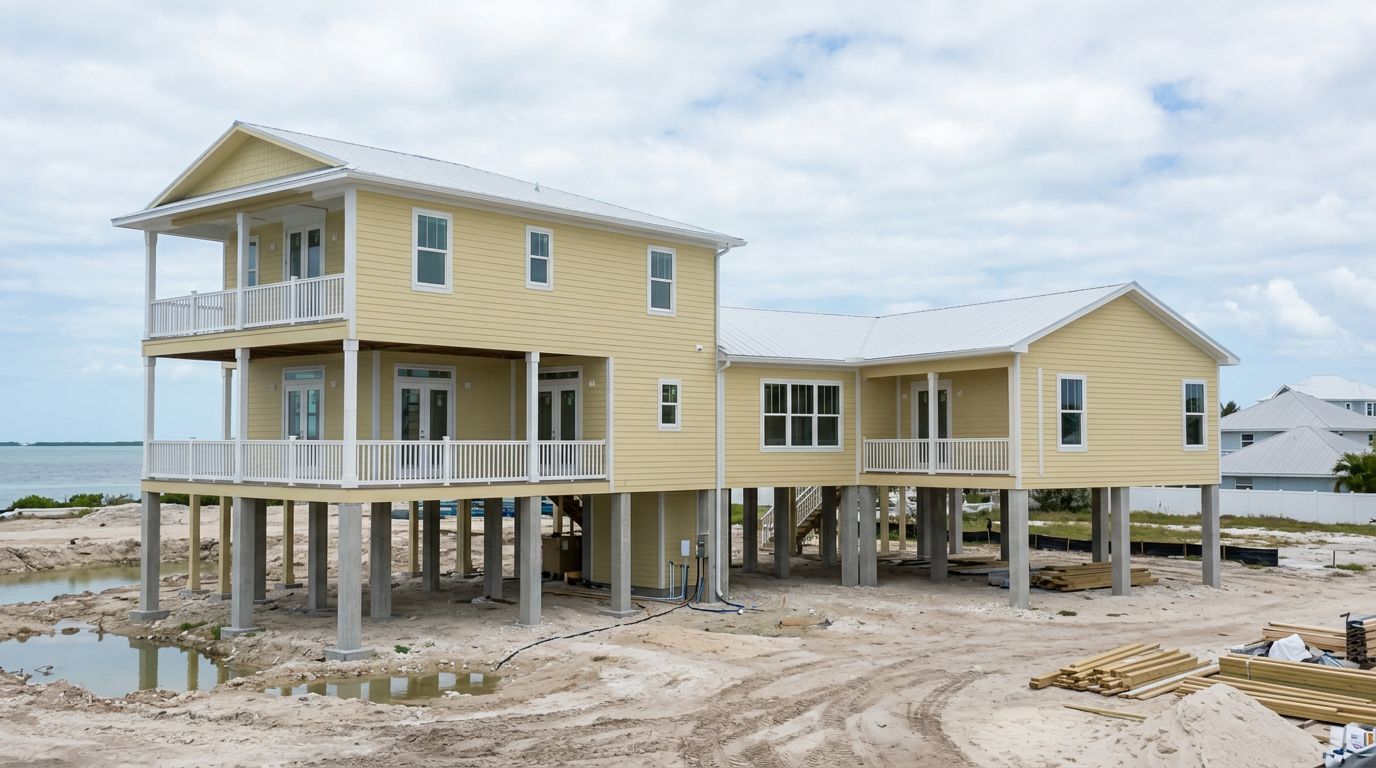
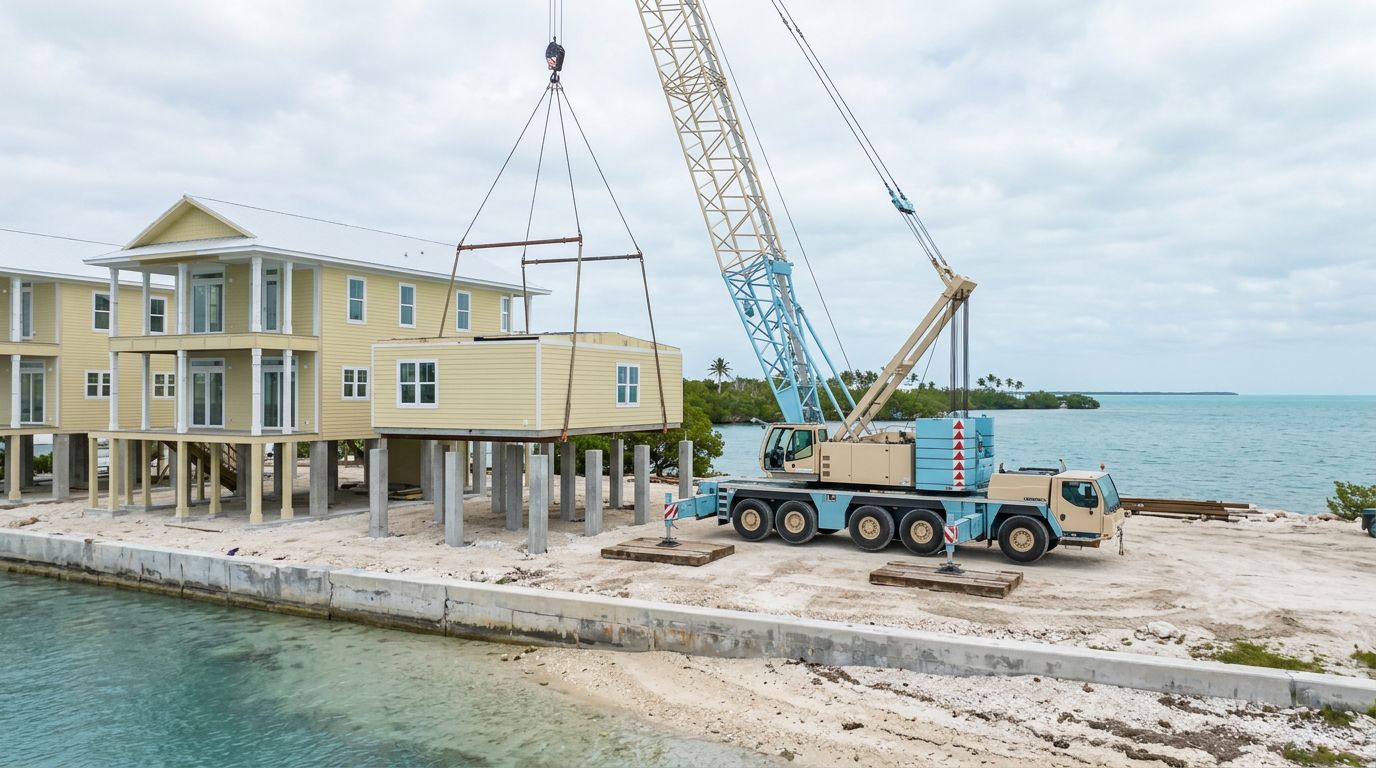
That matters on an elevated coastal project, where the crane may need to reach over a foundation and place modules on designated bearing points. A line near the lift area can change the planned crane position, the route for delivery vehicles, or the sequence of site work. Review crane outrigger ground conditions alongside utility information before approving the setup.
Check every planned equipment area
The review should include more than the crane's central position. Consider each outrigger location, the path delivery trucks need, staging space, and any area where crews will prepare or move equipment. A line crossing one of these zones can create a conflict even if it sits outside the home's footprint.
Include site history
Recent excavation, filled trenches, drainage changes, and areas that collect water can affect the condition of the ground. Those factors matter even when no utility line is directly beneath an outrigger. In Tampa and other Gulf Coast communities, a site walk should account for both what is underground and what may have changed at the surface.
What Utility Locating Can and Cannot Identify
Utility locating helps the project team identify known underground services before the crane plan is finalized. It gives the team information to compare with the proposed foundation, equipment locations, and access route. It doesn't replace the site's approved plans or a separate evaluation of ground conditions.
Start with participating utility services
Florida 811 is a starting point for locating participating utilities. Depending on what serves the property, the routes of electrical, water, sewer, and drainage lines may affect foundation excavation, delivery access, or crane positioning.
However, a locate for participating services may not identify privately owned lines. A private service, such as a line installed beyond a utility's ownership point, may require a separate locator. The project team should account for those lines as well as the public services marked for the site.
Treat markings as one part of the site picture
Utility marks help crews understand where a line may be located. They don't provide a complete map of everything underground, and they don't confirm that the surface above a line can support crane loads. That distinction matters when a crane's outriggers will apply concentrated loads near buried services.
For tight lots in Tampa or Fort Myers, resolving utility questions early can help prevent conflicts during delivery and lifting. Review underground services before crane setup as part of the broader access plan.
Connect Utility Routes to the Crane and Foundation Plan
A modular installation involves several plans meeting in the same work area. Utility routes, the crane's position, the delivery path, and the elevated foundation layout need to fit together before the structure arrives.
Compare routes with columns, beams, and access
On a coastal home, the foundation may include elevated columns, grade beams, or a slab. Utility trenches, sleeves, and service entrances can conflict with excavation or concrete work. A line may also cross the planned crane pad or delivery route, even if it doesn't conflict with the home itself.
At Mod Tech Construction, we coordinate installation and structural concrete with the final set in mind. That means considering crane access and module placement as the foundation work progresses, rather than treating them as separate phases. A project in Sarasota or Naples still needs a site-specific review, because lot layout and ground conditions differ.
Plan service paths before concrete work
Identify planned routes for water, sewer, electrical, communications, and drainage. Compare them with foundation members, service penetrations, meters, and the crane's access needs. If a route must cross a foundation area, coordinate its location before concrete work begins.
This is especially important when final utility connections will happen after the modules are secured. The pathways and sleeves may need to be ready earlier, while the final tie-ins remain part of later work. Use the site plan to coordinate utility routes before concrete work.
Review the Outrigger Area, Not Just the Building Footprint
The crane setup area can extend beyond the home's foundation. Outriggers may need room on several sides of the crane, and the planned lift radius can affect where the equipment sits. Utility lines and site conditions in those areas deserve attention even when they don't overlap the house.
A dry, level-looking area may conceal recent trenching or other disturbed ground. Drainage patterns and wet areas can also affect the setup review. Therefore, utility locating should be considered alongside a review of the ground and the proposed crane position, not as a stand-alone clearance.
Include septic and drainage features
A septic system adds more than a single buried pipe to the site plan. Tanks, drainfields, and associated lines may occupy areas that appear open. Drainage structures and culverts can also affect the proposed crane route or outrigger zones.
In the Florida Keys, Key West, and other coastal locations, account for onsite systems and drainage features when reviewing the lift area. Where septic components may be present, include septic systems in the crane setup review.
Keep a Clear Record Before Equipment Arrives
Once crews have located utilities and reviewed the crane plan, share the information with the people responsible for the foundation, delivery, crane operation, and installation. A common site plan helps prevent each trade from working from different assumptions.
Document routes and decisions
Keep the relevant utility information with the current site and foundation plans. Record where proposed utility paths meet the crane area, foundation work, or delivery route. If the plan changes, communicate the revision to the affected crews before they mobilize.
Photos and field notes can help show site conditions that drawings don't capture, such as recent excavation or areas affected by water. A pre-set review can then use the same information to assess utilities in the crane setup area.
Settle conflicts before mobilization
If a marked route overlaps an outrigger location or foundation excavation, resolve the conflict before the crane and modules are on site. The resolution may require a revised crane position, a change to the access plan, or coordination with the utility or project professionals responsible for that work.
A Modular Home Installation on an elevated coastal structure depends on precise coordination between the foundation and the set. Clear handoffs matter: the installation crew needs to know which areas are ready, which routes remain active, and what restrictions apply to equipment movement.
How Early Locating Supports Coastal Modular Setup
For a coastal project, utility locating is one step in preparing the site for Modular Home Setup. The plan also needs to account for the elevated concrete structure, delivery access, crane position, and the sequence for placing and connecting each module.
On a waterfront property near Naples, Sarasota, or the Florida Keys, limited staging space can make the planned route especially important. A utility conflict may affect where a truck can wait or how the crane reaches the foundation. Early coordination gives the project team time to consider the whole work area instead of focusing only on the building pad.
The same approach applies in Tampa Bay and Southwest Florida. Locate services before excavation, coordinate their routes with the foundation plans, and assess the crane's actual setup area before delivery. A lot preparation plan for modular delivery can help bring access, utilities, and work zones together.
Frequently Asked Questions
Does Florida 811 locate every buried line?
Florida 811 is a starting point for locating participating utilities. Privately owned lines may require a separate locator, so the project's underground services should be considered beyond the participating utility marks.
Does a utility mark approve a crane outrigger location?
No. A utility mark identifies a potential underground service location. It doesn't establish whether the ground above or near that line can support crane loads. The crane setup and ground conditions need their own review.
When should utility locating happen?
Begin before excavation and well before crane mobilization. Early information helps the team compare utility routes with foundation work, delivery access, and the proposed crane position while there is still time to coordinate changes.
What should the site review include?
Review utility routes, the crane and outrigger areas, delivery access, staging space, foundation excavation, drainage, wet areas, and any recent ground disturbance. Include septic components and other known underground features where they apply.
Locate First, Then Finalize Crane Setup
Buried services can affect the crane position, elevated foundation work, and delivery route on the same project. Locate them early, share the information with the installation and concrete teams, and assess the ground separately from the utility markings.
For a Tampa modular project, a safe set starts with a site plan that accounts for both what lies below the surface and how the crane will reach the foundation.
Recent Posts