Module Arrival Inspection in Naples: Before the Lift
A module can reach your property on schedule and still need a hold before placement. A module arrival inspection gives your Naples installation team a chance to document its condition before the crane set.
For an elevated coastal home, release to lift needs a clear decision supported by project documents. Delivery paperwork alone doesn't establish that a section is ready for placement.
The starting point is an agreed inspection scope, with clear responsibilities for recording concerns and resolving them before work proceeds.
Key Takeaways
- Define the arrival review and approval responsibilities before delivery day.
- Keep module condition records separate from foundation readiness and required building inspections.
- Use project-specific criteria to resolve suspected damage; don't rely on appearance alone.
- Coordinate delivery, crane scheduling, elevated concrete supports, and weather protection as one installation plan.
- Record unresolved concerns and the direction that clears them before placement.
Define the Module Arrival Inspection Before Delivery
An arrival review needs a written scope. Without one, the driver, installer, general contractor, and homeowner may each expect someone else to make the acceptance decision.
For a Naples project, confirm that scope against the approved plans, installation documents, contract, and applicable inspection requirements. These documents should establish what the team reviews and who can authorize the next stage.
Separate Visible Condition From Technical Acceptance
Exterior and accessible components belong within the project's condition-review plan. However, the exact inspection steps and acceptance criteria require verification through project documents or the responsible technical authority.
A visible concern doesn't establish its cause, severity, or effect on lifting. Similarly, a clean-looking exterior doesn't confirm the condition of concealed connections.
The reviewer should document observations without turning them into unsupported conclusions. Where technical judgment is necessary, the responsible engineer or qualified project representative should provide it.
Name the People Who Make Each Decision
Identify who receives the delivery, who records condition concerns, and who resolves technical questions. Also establish who communicates any hold to the installation and crane teams.
The homeowner shouldn't have to make a structural judgment because a truck is waiting. The driver shouldn't be treated as the person responsible for approving placement.
Modular home installation involves several coordinated trades. A named point of contact keeps an unresolved concern from disappearing between delivery, setting, and connection work.
Build a Condition Record That Can Be Used Later
Condition documentation is most useful when it connects an observation to a particular section and delivery event. General statements such as "some damage" leave too much uncertainty.
The project's documentation procedure should define the required photographs, written descriptions, identifiers, and delivery records. Follow that procedure rather than assuming a standard number of images or a universal form.
Keep Each Section Identifiable
A multi-section home needs records that distinguish one module from another. Use the section references established in the project documents so everyone discusses the same location.
Where available, retain earlier condition records alongside arrival documentation. They can help the project team understand when someone first recorded a concern, although they don't replace technical review.
For installations in Sarasota or Tampa, the same recordkeeping discipline applies. Local approvals and site requirements still need separate confirmation for the actual address.
Keep the originals accessible to the people handling corrections and approvals. A compressed image passed through several phones may omit useful detail.
Record Exceptions Without Guessing at Their Cause
Describe what the reviewer observed and what remains unresolved. Avoid assigning responsibility or diagnosing hidden damage without supporting information.
Delivery acceptance, condition exceptions, and permission to proceed should follow the agreed contractual process. Verify any signing requirements before the truck arrives.
A delivery acknowledgment and a release to lift answer different questions. The project's paperwork should make that distinction clear.
A complete record also captures later direction. An undocumented phone conversation can leave the setting crew unsure whether a concern was cleared or merely discussed.
Match Arrival Readiness to the Elevated Concrete Structure
Module condition is only one part of set-day readiness. The supporting concrete structure must also match the approved installation requirements.
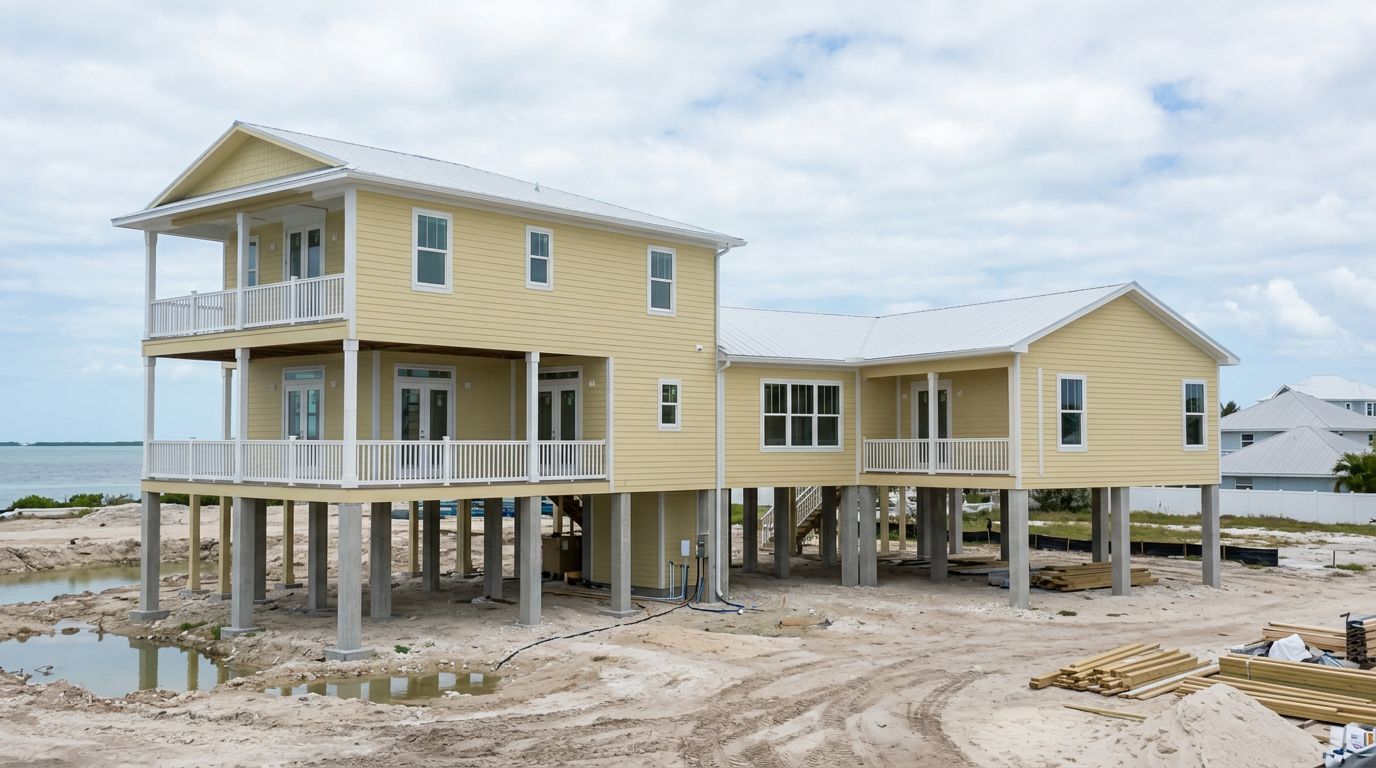
Mod Tech Construction coordinates modular placement with structural concrete work, including columns, grade beams, slabs, and elevated support systems. That coordination matters because the support layout and final set must agree.
Confirm Foundation Readiness Through Project Records
The installation plan should connect foundation completion, required concrete readiness, survey information, and inspection status. Exact requirements belong in the approved drawings and project specifications.
The team's readiness review should address bearing locations, elevations, and connection details through the applicable project documents. An arrival review doesn't substitute for those confirmations.
In Fort Myers, waterfront installation planning also brings access, drainage, utility conflicts, and crane bearing areas into the readiness discussion. Those issues need resolution before delivery becomes a waiting problem.
Keep Elevation and Structural Connections Together
Elevated concrete supports carry the home's loads and must address the wind and lateral forces identified in the design. Flood exposure, soil conditions, and connection details shape the approved support system.
For Key West and other Florida Keys projects, the required elevation and foundation design depend on the property's actual requirements. Experience elsewhere doesn't establish approval for that address.
Suspected damage near a support or connection location needs project-specific technical direction. The arrival team shouldn't invent a repair or change an engineered detail to maintain the schedule.
Resolve Suspected Damage Before Authorizing Placement
The purpose of documenting a concern is to support a decision. That decision may require further information, technical review, a defined correction, or a delay.
There is no universal damage threshold that clears every module for lifting. Verify acceptance criteria and any corrective work against the project's installation documents and responsible technical authority.
Different concerns require different decisions.
| Concern raised at arrival | Decision that needs documented direction |
|---|---|
| Suspected structural damage | Whether the section can proceed under the approved installation requirements |
| Possible water exposure | What assessment and protective measures the project requires |
| A support or connection concern | Whether the approved bearing and connection details remain applicable |
| Incomplete condition information | What evidence the responsible reviewer needs before release |
The common requirement is a documented resolution , not a quick visual reassurance.
The installation team should know whom to contact before these questions arise. Depending on the issue, that may include the general contractor, responsible engineer, delivery representative, or another designated project party.
Any correction needs a defined scope and an agreed way to verify completion. Temporary protection also needs direction suited to the section and site.
Avoid letting "we'll handle it after the set" become an undocumented assumption. Later access may differ, and placement can change which work remains practical.
Keep the Inspection Decision Connected to Set-Day Logistics
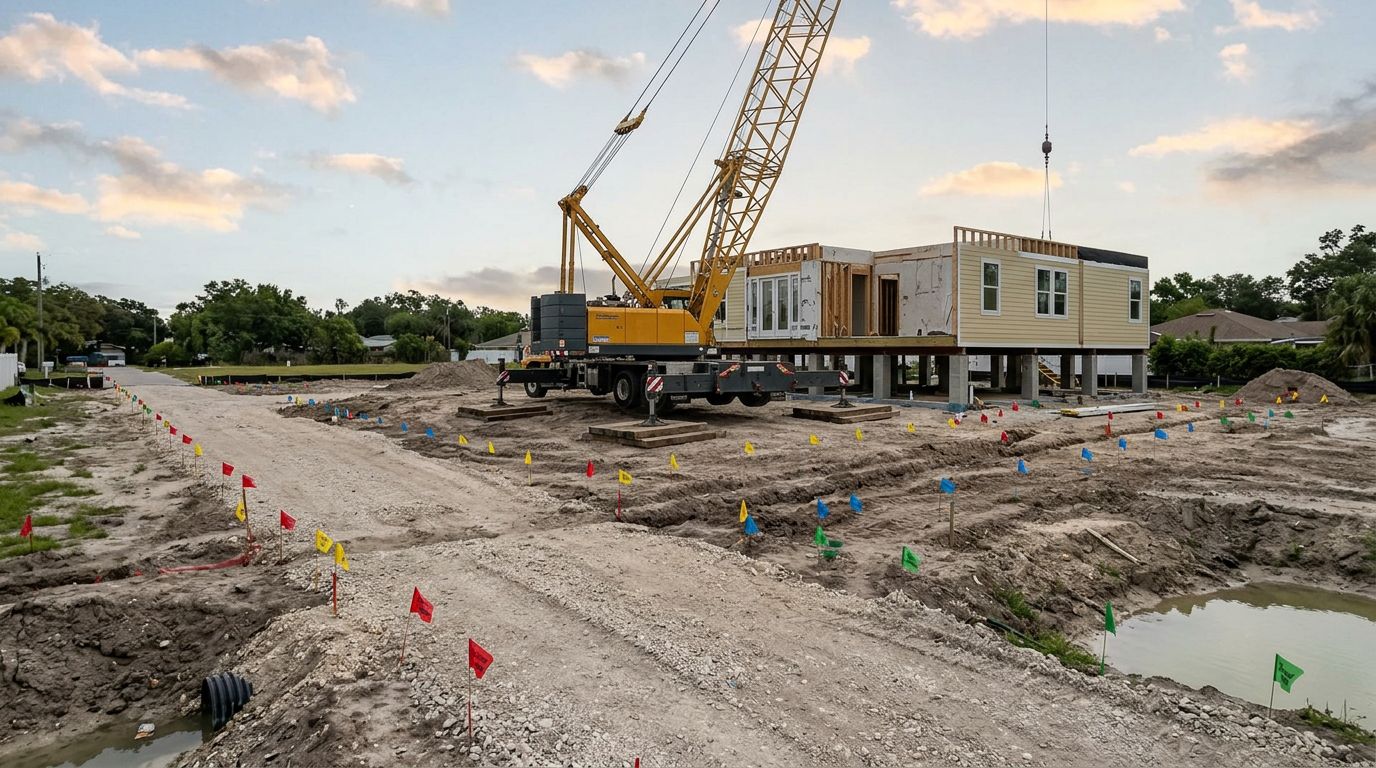
A module arrival inspection belongs within the delivery and setting plan. It shouldn't become a separate conversation that the crane team hears about too late.
Before scheduling, establish how the project will handle an unresolved concern. That includes communication, truck waiting arrangements, protected staging where available, and any change to the planned set sequence.
Plan for a Hold Without Improvising Handling
Crane scheduling creates pressure, but equipment availability doesn't establish that a module is acceptable for placement. The project needs a clear way to pause authorization while someone resolves a concern.
All handling and lifting procedures require verification through the applicable lift plan, installation documents, and qualified personnel. An arrival checklist cannot establish crane capacity, rigging suitability, or safe handling arrangements.
Also confirm how schedule changes affect the delivery and crane agreements. Waiting charges and return trips depend on those agreements; they aren't a single standard installation cost.
Reconfirm Conditions That May Have Changed
Coastal installation planning accounts for weather, access, ground conditions, and utilities. These factors can change after the original site meeting.
On gulf coast projects, including Naples, the current site review should follow the project's readiness process. Don't assume an earlier approval covers changed conditions.
The team's communication plan should identify who reviews those changes and who tells the delivery and crane parties. Technical acceptance of the module and operational readiness for the set remain separate requirements.
Carry the Arrival Record Into Post-Set Work
Arrival documentation should remain with the installation file after placement. It gives the team a reference for condition concerns, authorized corrections, and outstanding work.
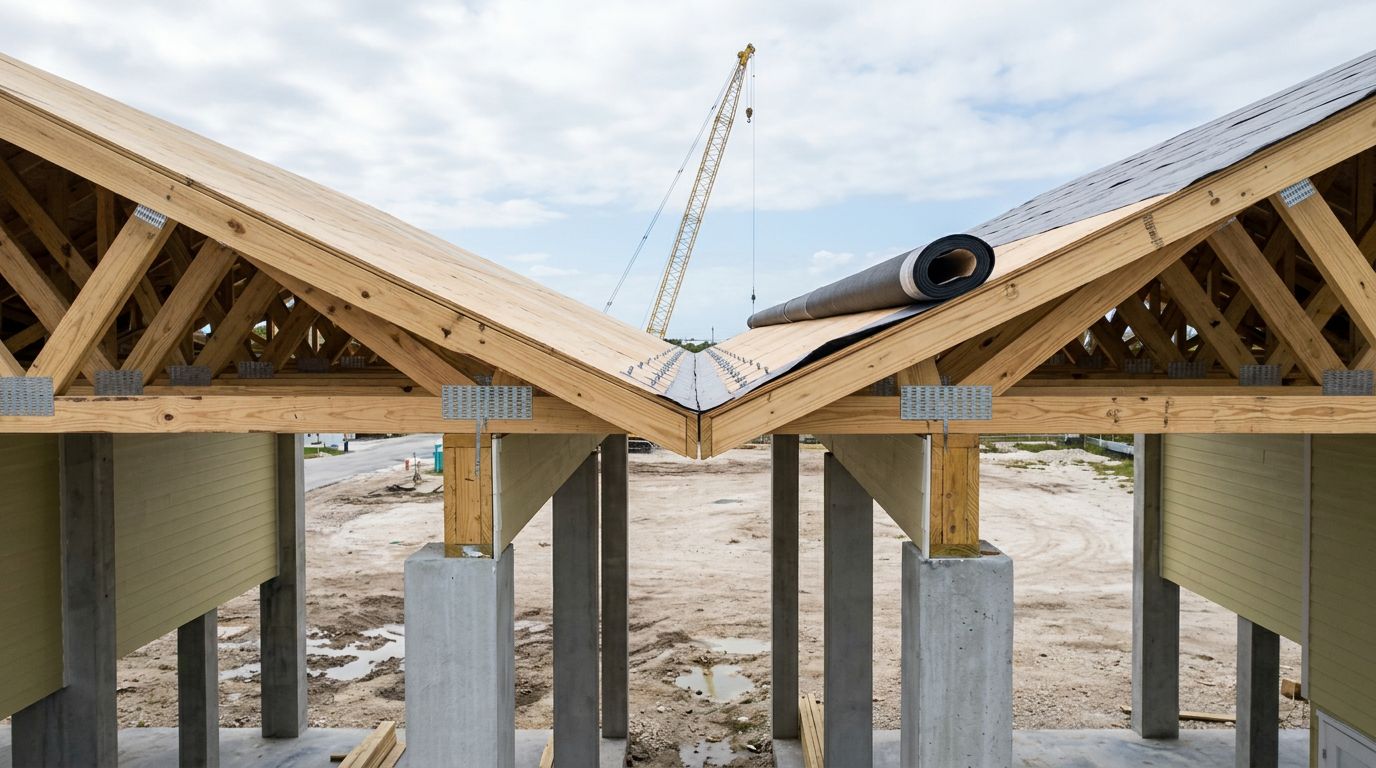
Modular home setup continues with section alignment, structural connections, marriage-line sealing, weather protection, and coordinated inspections. The approved plans and installation documents control the details.
Required elevation verification is another separate task. An arrival review doesn't establish the home's final installed elevation or replace survey documentation.
For coastal projects, keep condition records alongside the approved drawings, connection information, inspection results, and applicable elevation paperwork. The contractor can then connect arrival concerns with later work rather than relying on memory.
Any deferred item needs an owner and a completion point. Otherwise, a concern recorded during delivery may remain open while other trades assume the installation team resolved it.
The same discipline helps on multi-section projects, where several handoffs can occur in a short period. Each section's record should remain traceable through placement and completion.
Questions to Resolve Before the Lift
Several questions deserve answers before the arrival window becomes busy. Put those answers into the project plan so the crew doesn't have to negotiate responsibilities beside a waiting truck.
Who Can Clear a Suspected Damage Concern?
The answer depends on the concern and the project's assigned responsibilities. A condition recorder may identify an issue without having authority to approve a structural correction or release the section.
Confirm the responsible reviewer through the contract, approved plans, and installation requirements. Also establish how the reviewer will receive documentation and communicate a decision.
For concerns affecting structural details, obtain direction from the responsible engineer where the project requires it. Don't treat silence, an informal comment, or schedule pressure as approval.
Does Arrival Acceptance Replace Required Inspections?
Arrival acceptance doesn't replace required foundation, connection, building, or floodplain inspections. Each review has its own purpose and timing.
Confirm those requirements with the governing building department and project professionals. Requirements for a Fort Myers address shouldn't be assumed to apply unchanged in Naples or another coastal community.
The arrival process also doesn't establish final completion. Keep the release for placement distinct from approvals for subsequent work, inspection acceptance, and closeout. That separation gives homeowners a clearer understanding of what has been reviewed and what remains.
Make the Pre-Lift Decision Clear
A truck arriving on time is only one milestone. The stronger measure of readiness is a documented decision supported by the module's condition record and the project's approved requirements.
For an elevated coastal installation, clear responsibility connects that decision to foundation readiness and coordinated setting work. Resolve uncertainty before placement so the next crew receives a defined scope instead of an unanswered question.
Before your Naples delivery, confirm who records concerns, who clears them, and how the team communicates permission to proceed.
Recent Posts