Modular Home Crane Costs in Florida: What Drives Them
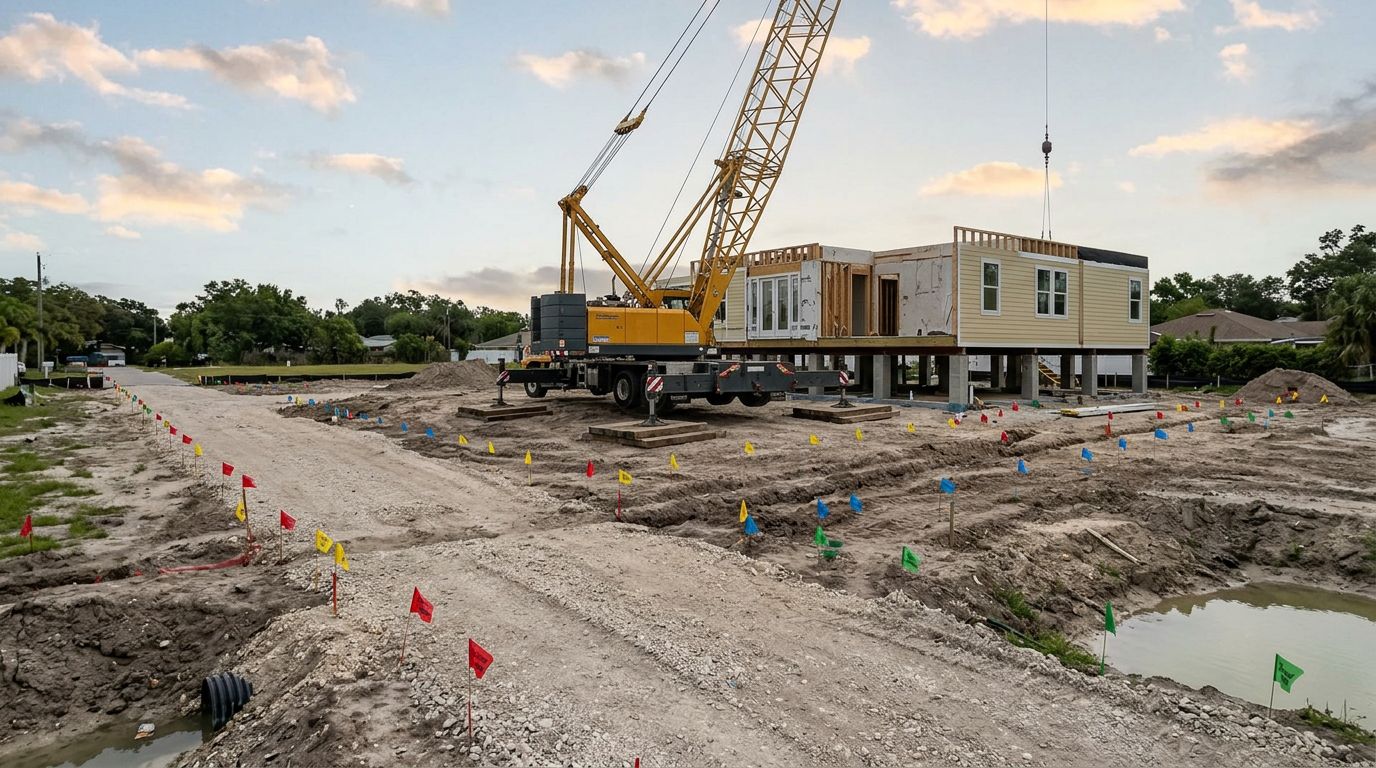
A crane set can take only a few hours, yet modular home crane costs can shift sharply when the site is tight, soft, elevated, or exposed to coastal weather. The crane itself is only one part of the bill.
For Florida property owners, the larger cost question is whether the foundation, delivery route, staging area, and setting crew are ready at the same time. Good planning prevents standby time, repeat mobilizations, and surprises after the sections are in place.
What Modular Home Crane Costs Usually Include
A crane proposal should show more than a single lump sum. Mobilization, travel, setup, operator time, rigging, and tear-down can all appear as separate charges. On a simple inland lot with clear access, the work is far more predictable than a waterfront set behind existing homes or mature trees.
Public Florida estimates put delivery and setup anywhere from roughly $1,000 to $7,000 for simpler projects. More demanding modular placements that require a crane often fall in the $5,000 to $20,000 range. Those figures are planning ranges, not substitutes for a site-specific lift plan.
Fixed mobilization costs start the clock
Most crane companies charge to bring equipment to the site and prepare it for work. That cost applies even when the actual picks take less time than expected.
Travel distance, escort requirements, crane size, and local permits can raise the mobilization line item. If a weather delay or late delivery forces a second visit, another mobilization charge may apply.
Hourly time depends on the entire jobsite
Crane time doesn't begin and end with lifting each module. The operator must set outriggers, place mats if needed, rig the load, wait for the delivery truck, make the pick, and break down safely.
A long reach over a house, seawall, or protected landscaping can require a larger crane and slower picks. Therefore, the lowest hourly crane rate isn't always the lowest project cost.
A crane can be on site and ready, yet still unable to work if the foundation has not passed inspection, a truck cannot enter, or wind exceeds the lift plan's operating limits.
Florida Modular Home Crane Costs by Site Condition
The phrase modular home crane costs covers a wide range because no two Florida sites handle equipment the same way. An open, dry lot gives the crane operator room to position outriggers and keep a short boom radius. Restricted coastal lots demand more planning and often more equipment time.
A useful budget separates the lift from the conditions that support it.
| Site condition | Likely effect on crane setting budget |
|---|---|
| Open, prepared inland lot | Lower crane size and shorter setup time |
| Narrow road or gated access | Possible off-site staging, smaller equipment, added labor |
| Soft soil or recent fill | Crane mats, stabilization, or an alternate crane location |
| Long boom reach | Larger crane and longer rigging time |
| Coastal or flood-zone elevation | More complex picks and foundation coordination |
| Overhead lines or tree cover | Route changes, utility coordination, or pre-work clearing |
The crane rate matters, but access and reach usually drive the final setting price .
Ground bearing protects people and equipment
Crane outriggers place heavy concentrated loads on the ground. Soft shoulders, drainage swales, loose fill, and saturated soil can make an otherwise accessible lot unsuitable for a planned setup.
Crane mats may distribute those loads, but mats add material, handling, and time. In some cases, the team must select a different crane position or improve the working pad before equipment arrives.
Delivery and crane schedules must match
The crane, section trucks, installation crew, and site superintendent need one shared schedule. When a delivery truck arrives late, the crane and crew may wait on the clock.
The written scope should identify who confirms delivery windows and who has authority to stop work. It should also explain standby charges, overtime, rain delays, wind restrictions, and rescheduling rules.
Elevated Concrete Structures Change the Budget
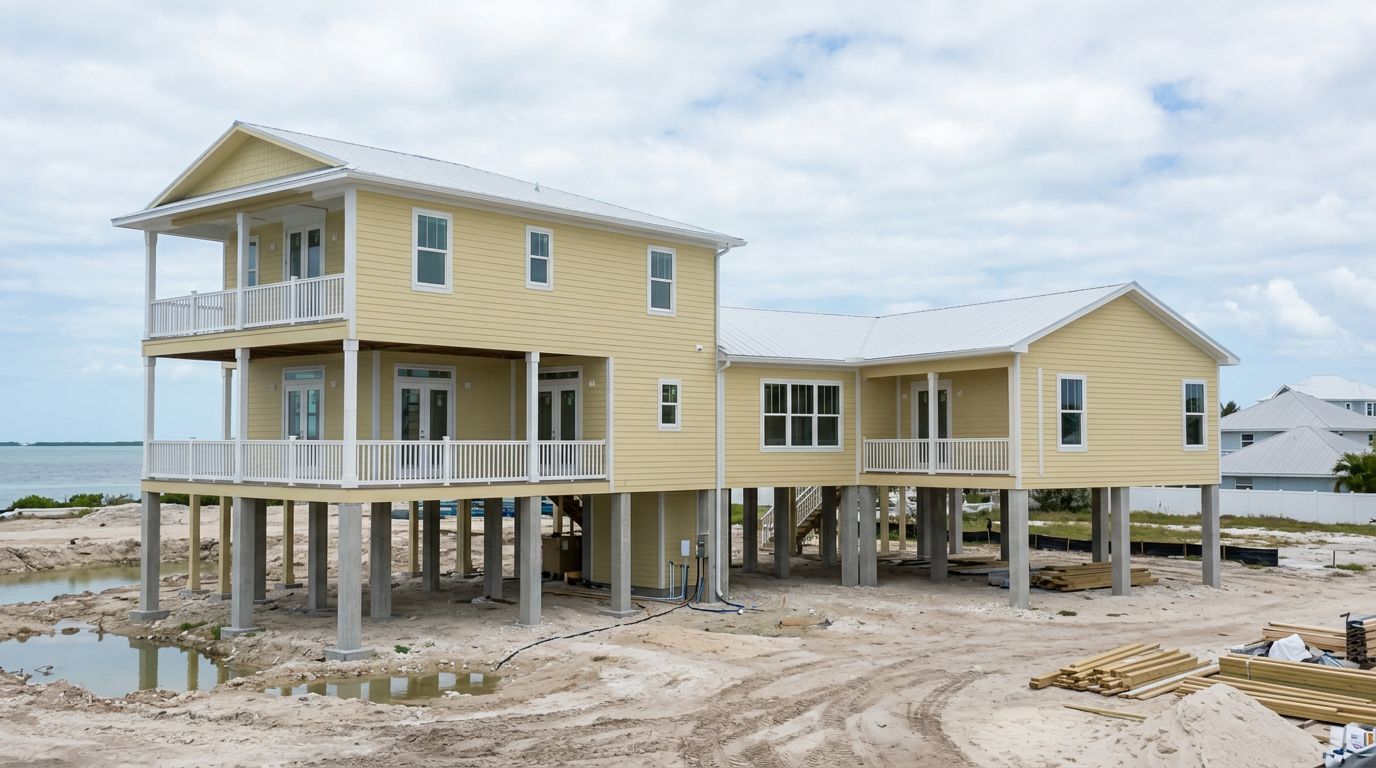
For coastal work, the crane is only as useful as the structure beneath the home. Elevated concrete columns, grade beams, stem walls, slabs, or pile-supported systems must match the approved engineering and provide accurate bearing points.
Florida's current 2023 Building Code, 8th Edition uses ASCE 7-22 for structural wind design. Local jurisdiction requirements, flood-zone maps, soil conditions, and site exposure determine the final foundation details.
Flood zones require more than extra height
In Special Flood Hazard Areas, the home elevation must meet the required Base Flood Elevation and any local freeboard requirement. Foundations must also address flood forces, scour, and the conditions shown on the engineered plans.
Coastal locations may need deeper foundations, pile systems, reinforced concrete elements, or other engineered support methods. Public Florida cost guides place elevated foundation work in a broad $15,000 to $60,000 range, before adding crane time, utilities, and close-up work.
Accurate bearing points prevent setting-day trouble
A small layout error can become a major problem when a multi-section structure arrives. Crews need correct elevations, dimensions, reinforcing details, concrete strength, anchor locations, and bearing surfaces before the crane is scheduled.
Foundation readiness should include inspection approval when required. It should also account for any engineering revisions caused by field conditions, such as unsuitable soils, dewatering needs, or unexpected excavation support.
Plan the Crane Route Before Scheduling the Set
A site can look accessible from the street and still create trouble once a loaded module truck turns onto the property. Gates, fences, low branches, parked vehicles, soft shoulders, and tight corners all affect delivery and crane placement.
A thorough pre-set review considers the route from the public road to the final bearing points. That review should happen early enough to solve problems without rushing the schedule.
Measure clearances and turning space
Module trucks need more room than passenger vehicles. The route must accommodate width, height, turning radius, and the ability to back or stage safely.
Overhead utilities deserve early attention. A power line near the crane swing area or delivery path may require coordination with the utility provider before setting day. Trimming branches or removing obstacles after the crane arrives costs more and risks a delay.
Waterfront access needs practical solutions
Waterfront properties often have narrow side yards, retaining walls, drainage features, or neighboring structures close to the build area. The crane may need to work from the street, a prepared adjacent area, or a specially designed setup location.
Temporary traffic control, off-site staging, engineered mats, and smaller equipment can help solve access problems. However, each solution affects labor, permits, and lift duration.
What Happens After the Crane Releases the Sections
The set is a major milestone, but it isn't the finish line. A complete Modular Home Installation scope should state what happens once the modules rest on the foundation.
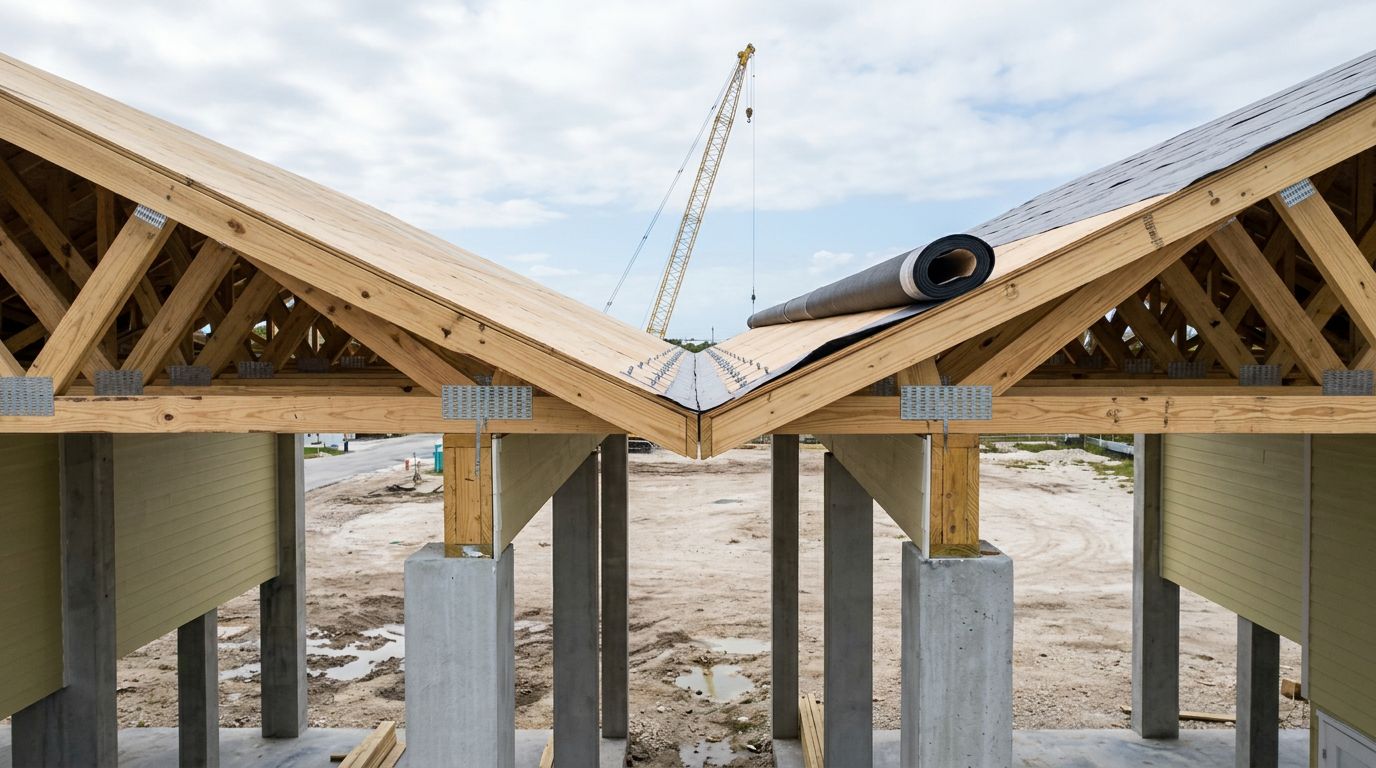
Multi-section structures need alignment at bearing points, structural fastening, marriage-line work, weather protection, and temporary support where the approved plans require it. The installation crew may perform some tasks, while other work belongs to licensed specialty contractors.
Structural connections need a defined scope
The estimate should explain whether it covers section alignment, fastening, roof or floor connections, anchor hardware, and any required corrections at the end of the shift. For a coastal project, approved connection methods and corrosion-resistant materials may also be part of the engineering requirements.
Ask whether the price covers a full field set or basic crane placement only. Those are different scopes, and comparing them as if they are identical can produce a misleading low bid.
Utilities and close-up work are often separate
Electrical service, plumbing tie-ins, HVAC connections, gas piping, septic work, water service, and meter installation commonly fall outside the setting crew's contract. Permit fees, impact fees, surveys, soil reports, grading, landscaping, and driveway repair may also be excluded.
A clear Modular Home Setup proposal assigns responsibility for inspections and failed-inspection corrections. It should also identify who protects the structure from rain while follow-on contractors complete their work.
Build a Florida Installation Budget in Layers
A practical budget starts with the known site conditions, then adds allowances for items that remain uncertain. Don't rely on a single "set price" if the route, ground conditions, or foundation design are still unresolved.
For an accessible, pad-ready Florida site, public estimates suggest that transport, setup, permits, and basic finish items may land around $9,000 to $16,000. Projects that need a crane, foundation work, utility coordination, or major site preparation often reach $30,000 to $60,000 or more.
Request the assumptions in writing
A useful estimate identifies the planned crane size, number of picks, expected hours, rigging, crane mats, and whether travel or fuel surcharges are included. It should state the assumed access conditions and explain charges for delay, overtime, weather, and remobilization.
Also ask whether the contractor inspected the site. A price based on photographs and assumed access carries more uncertainty than one built after a field review.
Separate allowances from included work
Some conditions can't be priced precisely until excavation starts or engineering is complete. Piles, helical piers, imported fill, dewatering, soil stabilization, and unexpected obstructions may belong in allowances or exclusions.
That isn't a problem if the contract makes the boundary clear. It becomes expensive when an owner assumes an allowance is a fixed price or assumes excluded work belongs to the installation crew.
Final Thoughts on Florida Crane Setting Costs
Florida modular home crane costs are controlled by preparation as much as equipment. A sound foundation, clear access route, coordinated delivery, and realistic weather plan keep the lift moving when the crane arrives.
For elevated coastal homes, the most important investment is often the work completed before setting day. Accurate concrete support and a detailed lift plan protect both the structure and the construction budget.
Recent Posts