Modular Home Rigging Inspection Checklist Before Crane Setting
A crane can place a modular section accurately, but it cannot fix a foundation that is out of elevation or a delivery route that cannot support the equipment. A complete modular home rigging inspection connects the approved plans, elevated concrete structure, crane setup, lifting gear, weather conditions, and setting sequence before the first pick.
This checklist is designed for coastal projects in Key West, the Florida Keys, Fort Myers, Naples, Sarasota, Tampa, and other Gulf Coast communities. Use it with the approved engineering documents, the crane operator's requirements, and the local inspection process.
Key Takeaways Before the Crane Arrives
- Confirm foundation elevations, bearing locations, anchor details, and connection points against the approved plans.
- Verify the flood-zone requirements and the design elevation for the actual property.
- Inspect slings, shackles, hooks, spreader equipment, and lifting points before each shift.
- Assign a qualified rigger and a qualified signal person. These are separate responsibilities.
- Check truck access, crane reach, outrigger support, overhead clearance, staging space, and weather.
- Do not start the lift until the foundation, rigging, crew, access route, and inspection requirements are ready.
A professional Modular Home Installation depends on clear handoffs between the foundation crew, transport team, crane operator, installers, engineer, surveyor, and building department.
Confirm the Elevated Foundation and Design Elevation
The foundation inspection is more than a quick look at the concrete. The team must confirm that the structure can receive the modules at the exact locations shown on the plans.
Check bearing locations and elevations
Compare the completed columns, piers, grade beams, slabs, or other elevated supports with the structural drawings. Confirm the elevation at every bearing location, not only at the corners. Small differences can affect floor alignment, marriage-line connections, doors, finishes, and the transfer of structural loads.
The foundation should be complete, cured as required, surveyed when required, and ready for any inspections listed in the permit documents. Check embedded plates, anchor bolts, straps, hold-downs, sleeves, and other connection details before delivery trucks leave the staging area.
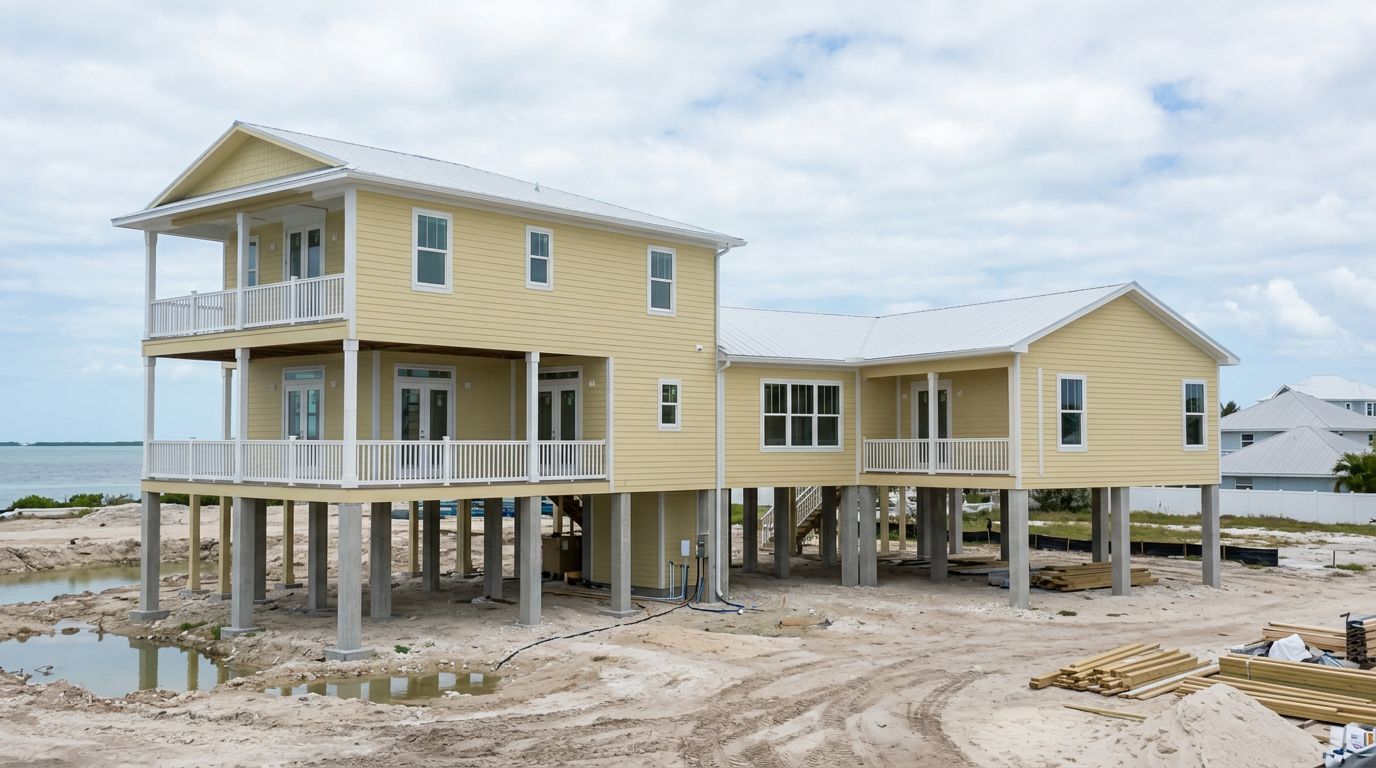
For a waterfront parcel in Key West or a low-lying Florida Keys community, the support system may need to place the home above the applicable flood elevation. The specific design depends on the property's flood zone, approved plans, engineering, and local requirements.
Verify flood-zone requirements
Florida flood-zone rules do not apply identically to every property. The cited municipal code language distinguishes Zone A from Zone V and Coastal A Zone, and references Florida Building Code Residential Sections R322.2 and R322.3. Those provisions may affect the required position of the bottom of the frame or other parts of the structure.
The engineer and local building official determine how the rules apply to the actual project. Do not rely on a foundation height from another property in Naples, Fort Myers, or Sarasota. Confirm the current flood-zone information, design elevation, elevation certificate requirements, and inspection sequence before crane scheduling.
An elevated concrete system also needs to address gravity loads, wind uplift, lateral forces, soil conditions, erosion exposure, and floodwater movement. The open areas below the home and the materials used there must match the approved design.
Inspect the Delivery Route and Crane Position
A finished foundation does not mean the site is ready for a crane set. The delivery trucks, crane, support vehicles, and rigging crew must reach the property and work without unsafe conflicts.
Walk the full route
Inspect the route from the staging location to the site. Record road width, turning radiuses, bridge limits, steep grades, parked vehicles, low branches, streetlights, utility poles, overhead lines, neighboring structures, and temporary traffic-control needs.
A restricted street in Key West may require a different delivery time or traffic plan. A canal-side property near Fort Myers may limit truck turning space. A narrow lot in Tampa may leave little room for crane outriggers and module staging.
Mark anything that needs relocation or protection before delivery day. That may include vehicles, landscaping, temporary power lines, fences, pavers, signs, or construction materials. A few inches can change the planned truck path or crane position.
Check the crane pad and lifting radius
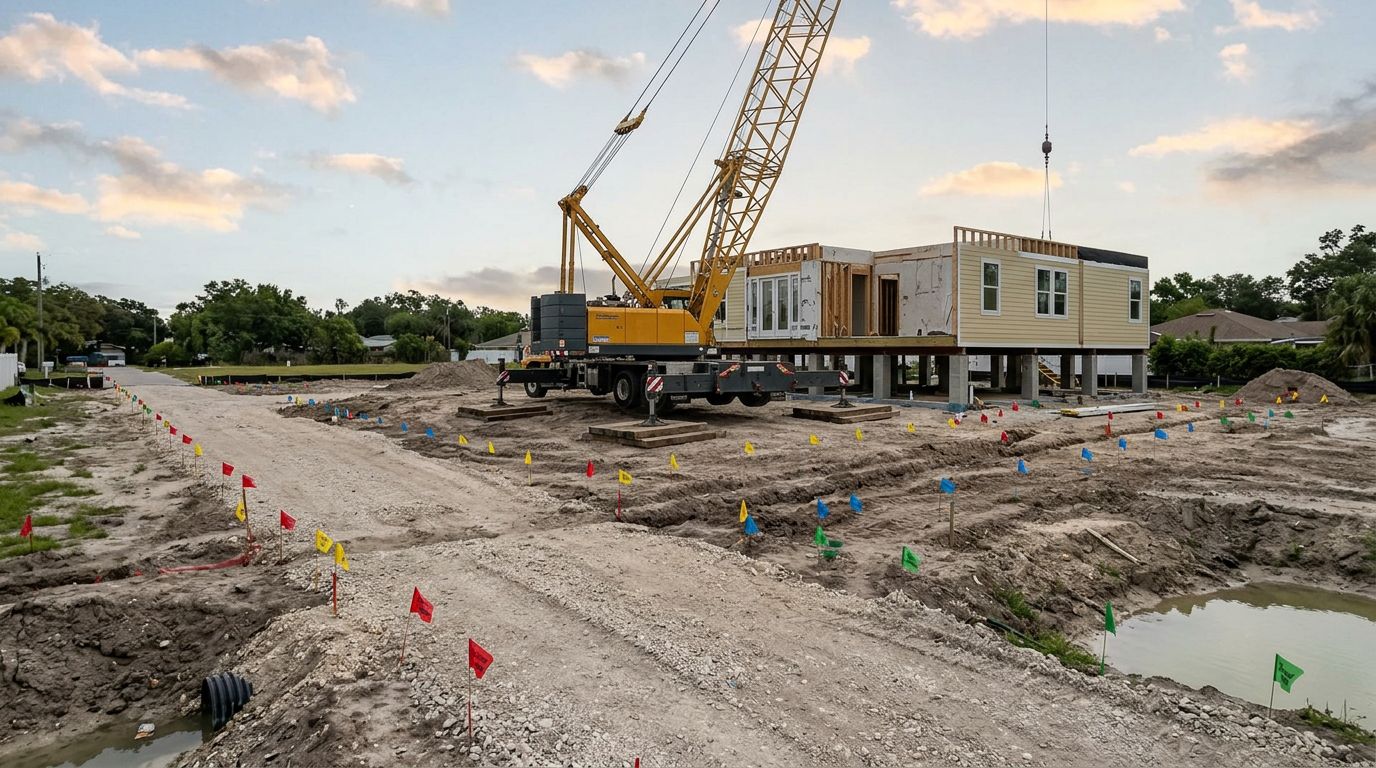
The crane setup area must support the planned outrigger loads. Review soil conditions, wet areas, soft fill, drainage, slopes, underground utilities, culverts, septic components, and nearby excavation. Use mats or other ground protection only when they are appropriate for the site and crane plan.
Confirm that the crane can reach each foundation bearing point without exceeding its rated capacity at the required radius. The plan may change if the crane must sit farther away, the boom must reach over a neighboring structure, or module exposure increases during the lift.
The crane operator should review the final position with the lift team before the first section arrives. A pre-set meeting can identify conflicts while there is still time to change the plan.
Verify the Lift Team and Required Documents
A safe lift needs more than an experienced crew. Each person must understand the assigned role, the approved sequence, and the limits of the equipment.
Assign qualified personnel
OSHA's 29 CFR 1926.1401 defines the qualified rigger concept for covered crane operations. OSHA does not require one particular third-party certificate when the person is otherwise qualified, but the rigger must have the knowledge and experience needed for the assigned work.
The signal person has a separate role. Under 29 CFR 1926.1428, the person must understand the signaling method, crane and equipment limitations, and site conditions. The required qualification process includes an oral or written test and a practical test. Qualification documentation should be available at the site.
Do not assume that the rigger and signal person are interchangeable. Name both roles before the lift and confirm who can stop the operation when a condition becomes unsafe.
Complete the lift plan
The lift plan should identify the crane operator, lead rigger, signal person, planned picks, module sequence, rigging arrangement, crane location, outrigger support, travel path, landing points, and communication method.
It should also address overhead obstructions, nearby structures, weather limits, restricted access, staging space, and the procedure for postponing the lift. A written plan helps the foundation crew, transport team, and installer work from the same information.
Keep the approved structural drawings, foundation plans, current survey information, permit documents, rigging details, and personnel qualification records available. The plan should state who coordinates the crane, delivery crew, inspections, engineering reviews, and local officials.
Complete the Modular Home Rigging Inspection
Rigging must match the load, lifting points, crane configuration, and planned movement. Never substitute equipment based only on appearance or availability.
Inspect every component before use
OSHA 29 CFR 1926.251(a)(1) requires rigging equipment to be inspected before use on each shift and as necessary during use. The inspection should cover slings, shackles, hooks, wire rope, chains, spreader beams, lifting devices, hardware, and connection points.
Look for cuts, broken wires, severe abrasion, crushed areas, heat damage, corrosion, deformation, stretched links, damaged stitching, missing identification, bent hooks, and unreadable capacity markings. Confirm that shackles have the correct pins and that hooks have functional safety latches when required by the equipment and plan.
Inspect the module's lifting points for damage, loose hardware, distortion, or conditions that could cause uneven loading. Confirm that the rigging angle and configuration stay within the equipment's rated capacity. The crane operator and qualified rigger should approve the final arrangement.
Remove defective gear immediately
Any defective rigging must be removed from service. Tag it clearly and place it where crews cannot return it to the lift by mistake. Do not repair, shorten, tie, weld, or modify rigging in the field unless the equipment manufacturer and responsible engineer approve the method.
Recheck the rigging after transportation, repositioning, contact with sharp edges, weather exposure, or an unexpected event. The inspection requirement continues during the operation, not only before the first pick.
A rigging inspection is a go/no-go decision. A component with uncertain capacity or visible damage should not remain in the lifting system.
Review Weather and Coastal Site Hazards
Coastal conditions can change the lift plan quickly. Wind, rain, saturated ground, salt exposure, and limited access all deserve a specific review.
Set weather limits before mobilization
The lift plan should identify the weather conditions that require a delay. The crane operator, qualified rigger, and responsible site representative must follow the crane manufacturer's limits, project procedures, and current site conditions.
Monitor wind and storm forecasts before delivery and again on set day. Large modular sections can present substantial wind exposure while suspended. Rain can reduce visibility, affect communication, and weaken crane pads or access roads.
A hurricane-season project in Sarasota or Tampa needs a clear postponement plan. Protect exposed connections and openings from rain if the set is interrupted, but do not pressure the crew to continue when conditions exceed the approved limits.
Control coastal access problems
Waterfront lots may contain seawalls, canals, soft shoulders, wet fill, narrow side yards, or restricted staging areas. These conditions can affect truck stability, crane placement, foundation access, and the order of the picks.
Protect pavers and finished surfaces where the approved plan requires it. Confirm that temporary utilities, overhead services, and nearby structures remain outside the crane's operating area. If conditions change, stop and have the responsible parties review the lift plan before continuing.
Plan the Set and Post-Set Handoffs
Crane setting ends when each section reaches its supports, but the installation continues afterward. The scope should cover the work needed to leave the structure stable, aligned, protected, and ready for inspection.
Follow the approved sequence
Unload and place each section in the correct order. The crew should verify bearing contact, align structural connections, fasten the modules, complete approved sealing, and protect exposed areas from wind and rain.
Multi-section structures need careful alignment before crews complete marriage-line connections and structural fastening. Temporary supports may be necessary if final connections cannot be completed during the same shift. The written scope should identify who provides those supports and who secures the structure at the end of the day.
Coordinate the next trades
The installer should know when the engineer must review a connection, when the surveyor needs access, when the electrician or plumber can begin, and when the building department requires an inspection.
Utility coordination should happen before the modules arrive, especially when trenches, sleeves, service routes, or temporary lines cross the foundation area. Approved scope may also include stairs, skirting, enclosures, weather sealing, or punch-list work. Each item should have a clearly assigned responsibility.
A complete Modular Home Setup plan gives every trade the same sequence instead of leaving decisions to the crew after the crane leaves.
Final Go or No-Go Checklist
Use this review before trucks enter the property:
- Approved plans and current foundation drawings are available.
- Foundation elevations and bearing points match the plans.
- Anchors, embeds, straps, and connection hardware are ready.
- Flood-zone elevation and local inspection requirements are confirmed.
- The delivery route is clear and traffic controls are arranged.
- Overhead wires, branches, poles, and nearby structures are identified.
- The crane pad is stable and suitable for the planned outrigger loads.
- Crane capacity and reach match the heaviest planned pick.
- Rigging has been inspected before the shift.
- Defective or unidentified equipment has been removed from service.
- The qualified rigger and signal person are assigned and documented.
- The operator, transport team, and installer agree on the set sequence.
- Weather conditions are within the approved limits.
- The engineer, surveyor, inspector, and utility contacts know their required timing.
- Temporary supports, structural connections, sealing, and weather protection are included in the scope.
If one of these items remains unresolved, pause the mobilization and assign someone to close it before the crane and loaded trucks arrive.
FAQ About Modular Home Rigging Inspection
Who should perform the rigging inspection?
A qualified rigger should inspect the rigging before each shift and as needed during use. The crane operator and lift supervisor may also review the equipment, but responsibility should be assigned clearly in the lift plan.
Does every rigger need a third-party certification?
OSHA requires qualified personnel for covered operations, but the rules do not require one specific third-party certification when the person is otherwise qualified. Keep training and qualification records available, and confirm any additional requirements from the project owner, employer, or local procedures.
What happens if the foundation is ready but the crane pad is not?
Delay the set until the crane support area is suitable. A finished elevated foundation cannot compensate for unstable ground, inadequate outrigger support, blocked access, or an unsafe crane radius. The crane company and responsible site team should review any revised position or ground protection.
Can the crane set continue during rain or wind?
Only when conditions remain within the approved lift plan, equipment limits, and site safety requirements. Heavy rain, saturated ground, poor visibility, or high winds may require postponement. The decision belongs with the responsible lift team, not the delivery schedule.
What should happen after the modules are placed?
Crews should verify bearing contact, align the sections, complete structural connections and approved sealing, install temporary supports when required, protect exposed areas, and coordinate inspections. A registered surveyor may also need to verify post-set elevation where the jurisdiction requires it.
A Safer Crane Set Starts Before Delivery Day
The strongest modular home rigging inspection checks more than slings and shackles. It confirms that the elevated concrete structure, flood-zone elevation, access route, crane pad, lifting team, weather plan, and post-set connections all support the same approved plan.
That preparation matters on every Florida coastal site, especially where narrow streets, soft ground, overhead utilities, canals, or elevated foundations limit the available options. When each handoff is clear, the crane can focus on the lift and the installation can move forward with fewer surprises.
Recent Posts