Crane Outrigger Ground Conditions for a Key West Modular Set
A foundation can be ready for a home while the ground beside it is unready for a crane. In Key West, crane outrigger ground conditions deserve attention before delivery trucks enter a narrow street or a lift begins near a canal.
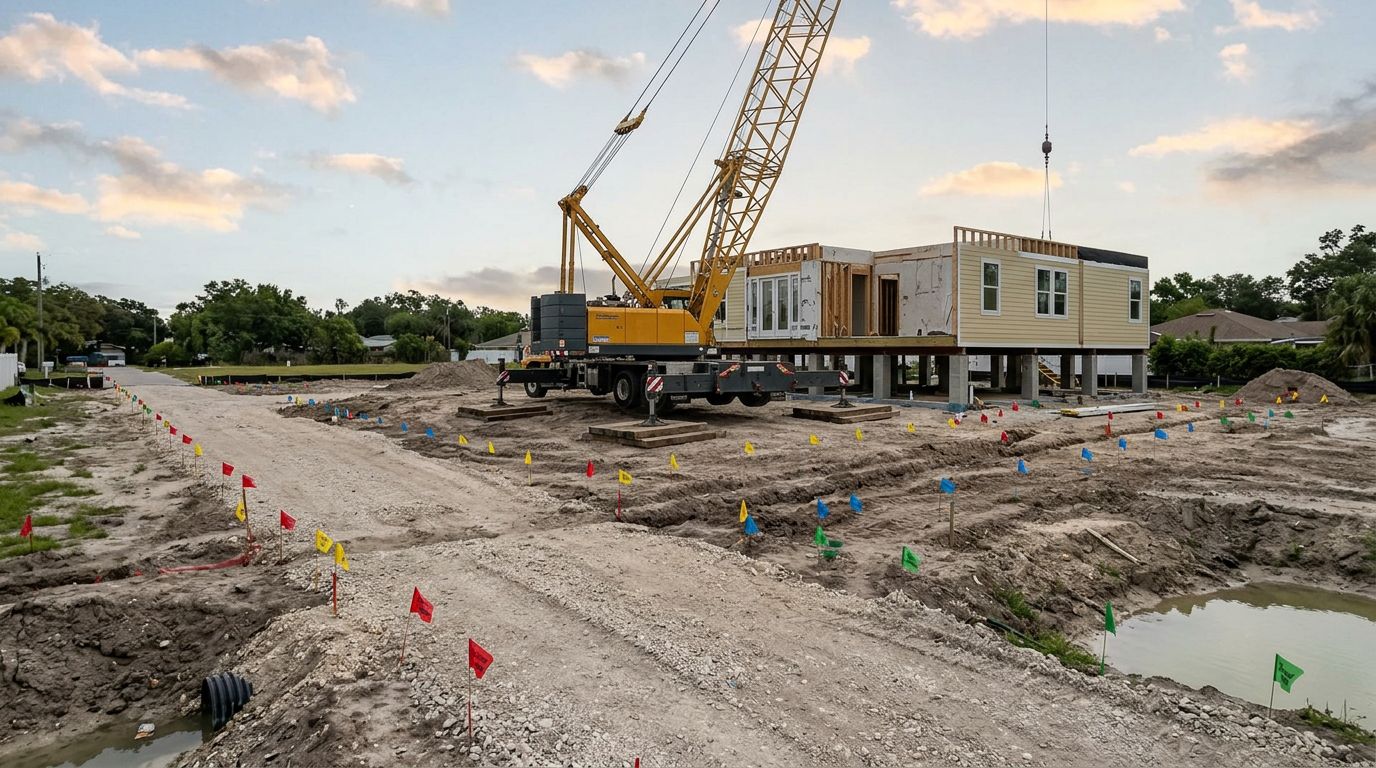
The crane needs dependable support throughout every pick, including when a section swings toward an elevated concrete foundation. Wet fill, buried services, and a waterfront edge can change where the crane can stand. A site review needs to settle those questions before setting day.
Why crane outrigger ground conditions decide the lift
Outriggers transfer the crane's working loads into the ground through its supports. Those loads change as the crane lifts and moves a section. A setup area that looks solid while the crane is idle still needs to support the planned work.
Space is part of the problem in Key West. A narrow lot may leave only one apparent crane position, while the foundation, neighboring buildings, overhead lines, and delivery trucks limit the lift path. Moving the crane farther away can change the required reach and the load the equipment must handle.
The crane provider needs the module weights, lift points, placement sequence, and proposed crane location to assess the job. The installation contractor needs to know whether that location has suitable ground and enough room for the outriggers and supporting materials. Neither decision can rest on a lot photograph alone.
For a modular home installation, the practical question is whether the proposed crane position works for both the lifts and the site beneath it. That answer belongs in the plan before transport is scheduled.
Find out what is beneath each outrigger
A firm-looking surface doesn't establish what lies below it. Site history, recent excavation, drainage, and underground work all matter where a heavy lift is planned.
Check disturbed and water-affected ground
A survey and site walk should identify fill, recent trenches, low spots, and places where rainwater collects. In the Florida Keys, a dry surface can conceal weaker material below. Contractors should also check whether excavation for the foundation or utilities has disturbed the proposed setup area.
If the ground needs testing or preparation, the appropriate project professionals should define that work. There is no universal soil-bearing figure or mat size that makes every coastal lot suitable for a crane.
Locate buried services before equipment arrives
Underground electrical, water, sewer, and drainage lines can cross an otherwise convenient outrigger location. Utility coordination should happen early, especially when services run between the street and an elevated home.
Florida 811 is a starting point for locating participating utilities. Privately owned lines may require a separate locator, and a utility mark doesn't establish that the ground above a line can carry crane loads. The team should compare the marked routes with the proposed crane position, then resolve conflicts before approving the setup.
Match the crane plan to the support surface
Crane outrigger ground conditions can't be judged apart from the lift plan. The planned equipment, pick locations, module information, and reach all affect the support assessment.
Get project-specific loads and support requirements
The crane provider should supply the information needed to evaluate the proposed setup, including the expected outrigger reactions for the planned work. A qualified professional can then assess whether the ground and any proposed supporting materials are suitable.
OSHA's crane ground-conditions rule, 29 CFR 1926.1402, addresses firm, drained, and graded ground capable of supporting the equipment under the manufacturer's specifications. It doesn't replace a site-specific review. A contractor shouldn't choose pads by appearance or assume a paved surface has adequate support beneath it.
Treat mats and surface protection as different decisions
An outrigger mat helps distribute load when the crane plan calls for it. Protection for pavers or landscaping has a different purpose. Neither solves an unsuitable setup location on its own.
On a Naples waterfront lot, for example, the team may need to consider paving, buried work, and the distance to a water's edge together. The crane provider and project professionals should settle the proposed support arrangement before anyone orders equipment or blocks the delivery route.
Keep clear of edges, obstacles, and traffic
A crane needs more than a stable spot under each outrigger. It needs a workable position for the full set, with room for delivery vehicles and a clear path for each section.
Review seawalls and nearby excavations
A canal edge or seawall should prompt a closer look at crane placement. Its visible surface doesn't establish what the adjoining ground can support. Nearby excavations and foundation work may also affect a proposed setup area.
The team should identify these features on the site plan and review them in the field. If a candidate position puts an outrigger near an edge, the crane provider and appropriate engineer need to assess it. Shifting equipment a few feet may solve one ground concern but create a longer or obstructed lift.
Confirm the street and delivery path
In Fort Myers, a delivery truck may need space beside the crane while the crew rigs a section. A narrow road, parked vehicles, overhead wires, or a tight turn can upset that sequence.
If the setup extends into a street or public area, confirm applicable permissions and traffic arrangements with the responsible authority. Check where trucks will wait without blocking crane access. The same field review should account for concrete trucks and pumps that may still need access while the elevated structure is being completed.
Build the elevated foundation with setting day in mind
The approved foundation plans control the home's support and connections. Crane access needs attention during that work, not after the concrete crew leaves.
Verify elevations and bearing locations
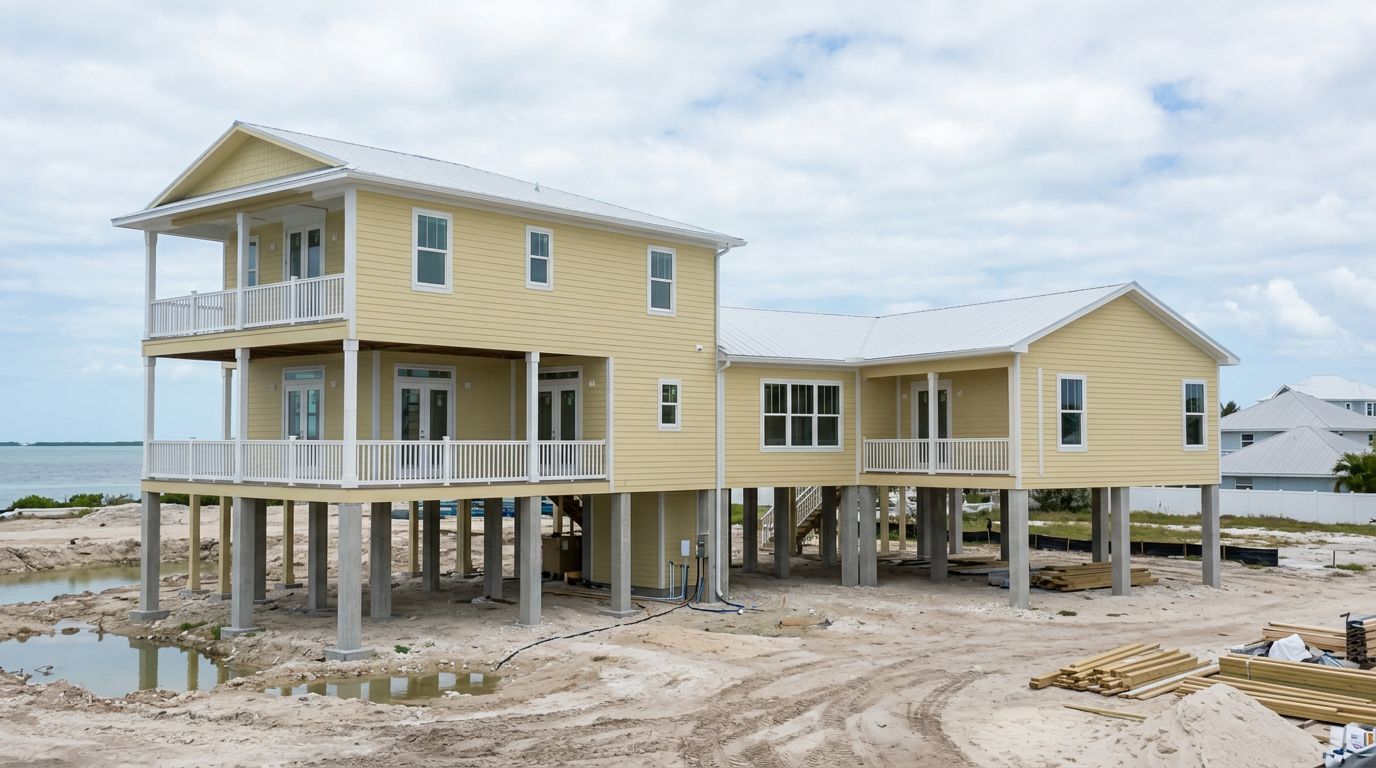
An elevated coastal foundation may use concrete columns, piers, grade beams, or other elements shown on the engineered drawings. Crews prepare the site, place the concrete work, and verify the finished elevations and bearing locations before the modules arrive.
A bearing point that doesn't align with a home section can stop the set even if the crane has excellent ground. In Sarasota, as on a Key West waterfront lot, the survey, foundation drawings, and installation plan need to describe the same finished position. Required inspections and concrete readiness also need confirmation before delivery.
Protect the planned crane position during site work
Excavation, stockpiles, utility trenches, and drainage changes can alter the ground that the crane plan relies on. The site team should mark the intended setup area and revisit it as work progresses.
A foundation can pass its readiness checks while a newly excavated trench makes the planned outrigger position unusable.
Where flood exposure calls for an elevated support system, the foundation design also needs to address the approved loads and elevation. That structural work doesn't remove the need for a separate crane ground assessment beside it.
Recheck the site before the first pick
Conditions can change between a planning visit and setting day. Rain, new utility work, or parked equipment may invalidate an earlier layout.
Hold a final site and weather review
Before dispatch, the installation contractor and crane provider should confirm the proposed setup area, access route, lift path, and forecast. A Tampa project may have more staging room than a compact Key West parcel, but saturated ground can still delay either set.
Wind affects the suspended sections, while rain can affect both access and ground support. The crane team must decide whether conditions allow the planned operation. If the ground no longer matches the assessed condition, stop and revise the plan rather than pressing on with a loaded truck waiting nearby.
Set each section in the planned order
Once the crane is positioned and rigging is ready, the crew lifts sections in the agreed sequence. Installers place each one on its designed bearing points, align adjoining sections, and complete the required connections and weather protection under the approved plans.
That sequence depends on dependable crane support through the final pick. A late change in crane position can affect reach, delivery order, and placement over the elevated foundation. Everyone directing the set needs the same current plan.
Put ground-readiness decisions in writing
A useful pre-set meeting brings together the installation contractor, crane provider, foundation team, and other project professionals whose work affects the setup. Review the survey, approved drawings, utility information, proposed crane position, delivery route, and inspection status.
The written scope should say who provides ground information, who arranges any needed assessment, and who prepares or protects the crane area. It should also identify who can approve a changed setup location. For modular home setup in Gulf Coast communities, those assignments matter when rain or site work changes the conditions shortly before delivery.
Record unresolved issues as decisions to close before mobilization, not tasks to handle while the first section waits on a truck. A clear handoff gives the crane crew and installers one agreed starting point.
Key takeaways for coastal crane setup
- Confirm the proposed crane position against the full lift and delivery sequence.
- Check disturbed ground, drainage, buried services, and nearby waterfront edges.
- Have the crane provider and appropriate project professionals assess support needs for the actual site.
- Verify the elevated foundation's elevations, bearing points, and readiness before delivery.
- Recheck ground and weather conditions before the first pick.
Frequently asked questions
Can a crane set up on an existing driveway?
Possibly, but its appearance doesn't establish its supporting capacity. The crane provider needs to evaluate the planned loads, and the team needs to understand what lies beneath the driveway. Buried services and disturbed ground may rule out an otherwise convenient position.
Will outrigger mats fix soft ground?
Mats can be part of an approved support arrangement. They don't make every soft or wet area suitable. The required approach depends on the crane plan and a site-specific assessment of the ground.
Does an elevated concrete foundation change crane planning?
Yes. The crane must reach the designed bearing locations while avoiding the foundation and any surrounding obstacles. Foundation excavation and utility work can also change the ground available for setup. Review both plans together before the concrete work closes off access.
Who decides whether a set should be delayed after rain?
The crane team must assess whether it can operate under the current conditions. The installation contractor also needs to confirm site and foundation readiness. If the assessed setup area has changed, the team should resolve that condition before lifting.
Conclusion
The ground beside a finished foundation can determine whether a Key West set proceeds safely. Verify the crane position early , then protect and reassess it as the site changes.
When ground support, elevated concrete work, and the lift sequence agree, the crew can focus on placing each section where the approved plans require it.
Recent Posts