Florida Oversize Load Permits for Modular Home Delivery
A modular section can reach the jobsite on schedule and still miss its crane slot if the permitted route ends where the truck cannot turn. For coastal projects, delivery access needs the same attention as the foundation and lift plan.
Florida oversize load permits govern the road move, but they don't make a narrow Key West street or a soft Fort Myers crane pad usable. Before dispatch, the hauler and installation team need to match the permitted load, travel conditions, site access, and foundation readiness.
Key Takeaways
- Florida's normal width limit is 8 feet 6 inches, and its normal height limit is 13 feet 6 inches. A delivery exceeding applicable size or weight limits needs the appropriate authorization.
- FDOT issues over-weight and over-dimension permits. The permit type, approved route, and movement conditions depend on the actual truck-and-load combination.
- A road permit doesn't replace building approvals or site preparation. Confirm the last turn, crane position, and elevated foundation before scheduling delivery.
When Florida oversize load permits apply
Check the complete traveling dimensions
Florida's statutory width limit without an oversize permit is 102 inches (8 feet 6 inches) . Its standard height limit is 13 feet 6 inches . A modular section may exceed either limit once it is secured to its transport equipment. Length and weight can also affect the authorization required.
The hauler should establish the overall traveling width, height, length, and weight, rather than relying on dimensions from a site plan. Trailer height, equipment, and the way the section rides all matter. A few inches can change routing or travel conditions near a bridge, sign, or overhead wire.
Keep road permits separate from site approvals
The Florida Department of Transportation (FDOT) handles over-weight and over-dimension road permits. The building department handles approvals tied to the structure and its installation. They answer different questions: one addresses movement on the road; the other addresses what can be built and set on the parcel.
Don't assume a modular section follows every rule written for a mobile home. FDOT's movement conditions mention modular buildings alongside manufactured and mobile homes in some provisions, but that grouping doesn't establish one permit class or identical length limits for every load. Have the carrier confirm how FDOT classifies the specific move.
Which FDOT permit fits the delivery?
FDOT lists several permit options through its Over-Weight Over-Dimension Permits program. The right choice depends on the move and the carrier's operating plan, not simply on the building's destination.
| FDOT permit option | Listed duration or use | Delivery planning point |
|---|---|---|
| Trip | Ten days | Check whether it covers the planned move and dates. |
| Blanket | Annual | Verify that the load qualifies and follow its movement conditions. |
| Vehicle Specific Blanket | Annual | Confirm the permitted vehicle matches the transport equipment. |
| Route Specific Blanket | Three months | Establish the defined route before relying on it. |
FDOT says eligible Trip permits can be self-issued through its Permit Application System (PAS) for loads up to 16 feet wide, 18 feet high, 150 feet long, and 200,000 pounds . Self-issuance requires GIS routing. Those figures describe the system's self-issue limits, not automatic approval of every route or permission to ignore conditions printed on the permit.
For a single Naples home set, the hauler may evaluate a Trip permit. A carrier making repeated moves may consider a blanket option. In either case, confirm eligibility with FDOT and review the issued document before dispatch.
Build the permit application around the real move
Give the hauler usable load and schedule details
PAS is FDOT's application system. Its instructions distinguish Trip applications from Blanket applications and require applicants to review and submit their entries. The carrier or permit service needs accurate dimensions, equipment information, origin, destination, and the intended route.
Share the delivery sequence as well as the address. A multi-section home might require separate trucks or arrival times. If sections reach a Sarasota lot in the wrong order, one trailer can block the crane's access to the next pick. The installer should agree on a practical staging plan before the carrier finalizes travel arrangements.
Leave time for moves needing extra review
FDOT's rules require applications for non-routine permits to arrive at least 10 business days before the scheduled move. That lead time matters when dimensions or route constraints put a delivery outside routine processing.
Even a move eligible for self-issuance needs planning time. If the route changes after a turn proves impossible, the carrier must check whether the permit still authorizes the new path. Don't treat an emailed permit as the final scheduling step; read its route and conditions against the actual delivery plan.
Inspect the route all the way to the foundation
Check structures, clearances, and turns
A highway route is only part of a Tampa-area delivery. The hauler must verify that the permitted path works for the traveling dimensions, including bridge restrictions, vertical clearance, and turning space. Check construction and temporary restrictions close to the move date.
On the Florida Keys, the final approach can be more difficult than the long-distance drive. A truck may clear the main road but struggle with a tight neighborhood turn, parked cars, branches, or utility lines. Site photos help, but they don't replace a field check of the vehicle's actual approach.
Plan the handoff from street to crane
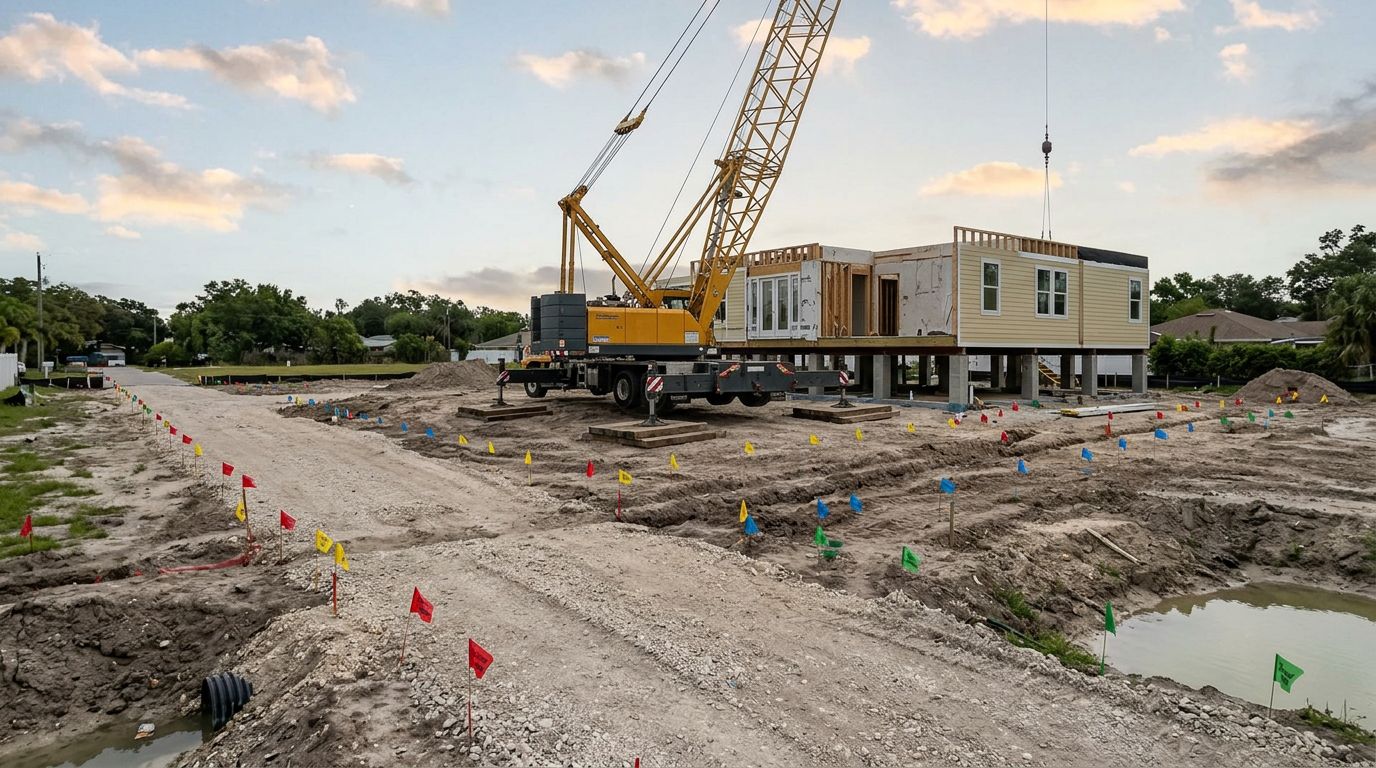
The transporter needs a place to stop and a clear path to leave after unloading. Meanwhile, the crane needs room for its outriggers and a lift path free of overhead obstructions. On a narrow Key West parcel, those needs can compete for the same strip of ground.
Review driveway slope, gate openings, neighboring property, and any canal or seawall edge. Confirm who will arrange any necessary local street or traffic approvals with the appropriate authority. An FDOT permit alone doesn't reserve a curbside staging area or authorize a street closure.
A permitted route can still fail at the property line if the delivery truck has nowhere to position for the lift.
Read the travel conditions before setting crane day
Confirm the allowed time and equipment
Travel windows and required safety equipment depend on the applicable permit conditions. FDOT's Blanket Permit Movement Conditions call for daytime-only travel and flags in the width band over 8 feet 6 inches through 10 feet. Wider or otherwise different moves need review under their own applicable conditions.
Don't apply that one width band to every modular delivery. The carrier should check the issued permit for authorized hours, route instructions, warning devices, and any restrictions affecting the planned day. A late departure can have consequences when daylight is limited.
Verify escorts for the specific route
Escort requirements can vary with load dimensions and route conditions. Ask the hauler to identify any required escort vehicles or other traffic arrangements from the actual permit. Don't schedule escorts based on a generic statewide rule of thumb.
This matters around Fort Myers and other Gulf Coast communities where a delay can leave little time for unloading. The crane operator, transport dispatcher, and setting crew need the same arrival window. If weather forces a postponement, the carrier should verify that the rescheduled move remains within the permit's validity and conditions.
Prepare elevated concrete before the trucks roll
Confirm elevation, bearing points, and connections
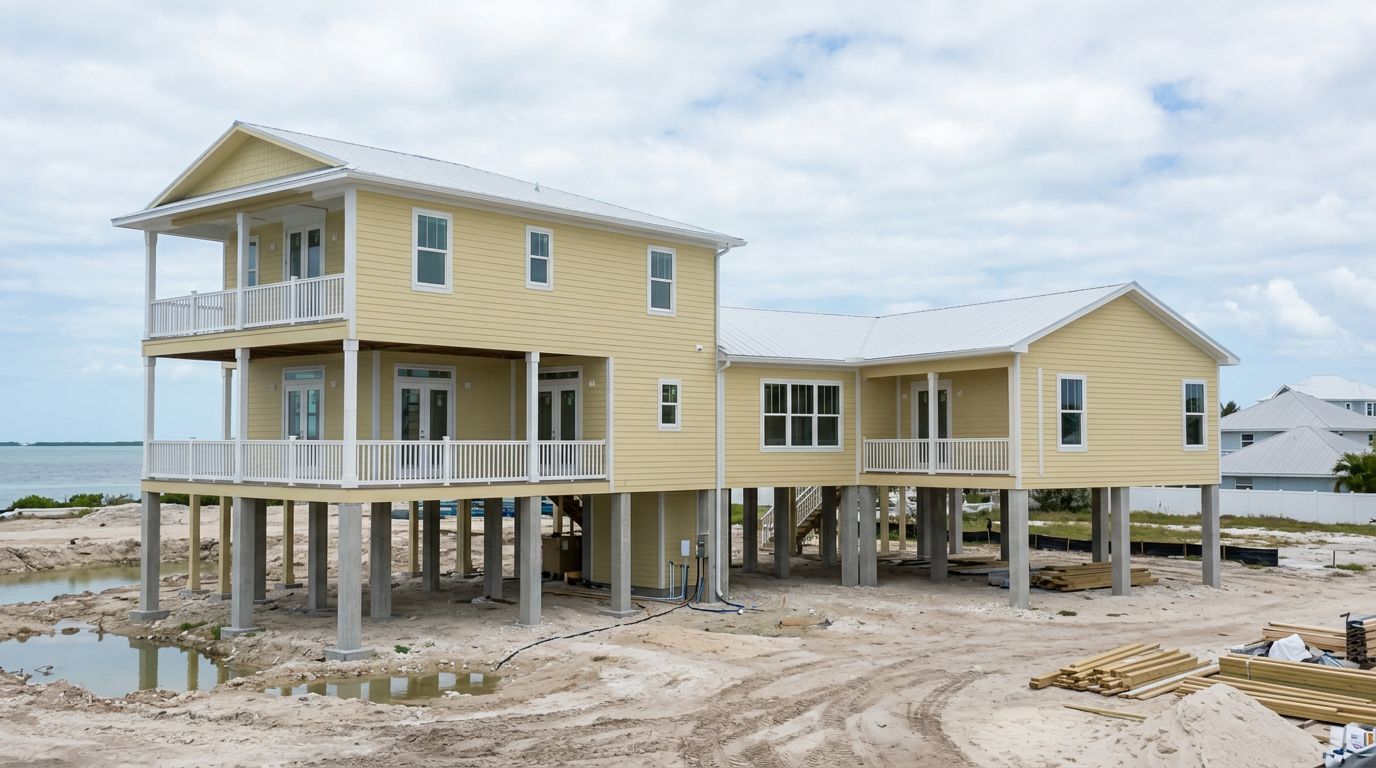
For a coastal modular home installation, road permission is useful only when the receiving foundation is ready. The installer should compare the survey, approved plans, and foundation drawings with what crews built. Check elevations, bearing locations, anchor details, and the position of each section's connection points.
In Naples or Fort Myers flood-prone areas, the design may call for concrete columns, piers, grade beams, or an elevated slab. The engineer's plans determine the support system for the parcel. Crews should verify that concrete has reached the required condition and that necessary inspections are complete before committing to a delivery date.
Keep heavy equipment off unsuitable ground
An elevated foundation doesn't guarantee a workable crane setup. The crane's outriggers need suitable bearing ground; wet fill, a narrow side yard, or ground near a seawall may rule out the first proposed position. The lift radius also affects how the operator can place each section.
Walk the site with the crane and setup teams while there is still time to revise the plan. Locate underground utilities and identify overhead lines before selecting the crane pad. In Sarasota and Tampa, a foundation can match the drawings while the delivery path remains blocked by landscaping or an unprotected driveway.
Tie permit timing to the installation schedule
Modular home setup has several linked dates: foundation completion, inspection, permitted travel, crane availability, and the set crew's work. Put one person in charge of confirming those handoffs. The agreement should state who obtains the transport permit, who checks local access requirements, and who calls off a move if the site isn't ready.
Before release from staging, hold a final readiness check. Confirm the permit and route with the hauler, then check foundation measurements, crane ground conditions, delivery order, and forecast with the installer. High winds or saturated soil can stop a safe lift even when the road move remains permitted.
After placement, crews align and secure the sections, complete the specified structural connections, and protect exposed areas. Utility work and required inspections follow the approved project sequence. For a Gulf Coast property, avoid scheduling those trades as though the crane pick completes the entire installation.
Frequently Asked Questions
Does every modular home delivery need an oversize permit?
No. The need depends on the measured traveling load and applicable size or weight limits. Florida's standard width and height limits are 8 feet 6 inches and 13 feet 6 inches. The carrier should check the complete vehicle-and-load combination, along with length, weight, and route requirements.
Can a permit cover the drive to a Key West property but not the set?
Yes. A road permit addresses authorized movement under its conditions. It doesn't establish crane bearing capacity, provide permission to occupy a local street, or confirm that elevated concrete supports match the approved plans. Those issues need separate checks before the truck departs.
What if the delivery date changes because of weather?
First, protect the site and postpone any unsafe lift. Then have the carrier check the permit's valid dates and movement conditions before choosing a new delivery window. Reschedule the crane, escorts if required, and setting crew together so the sections don't arrive without a safe unloading plan.
Conclusion
A Florida road permit gets a modular section onto an authorized route. A ready site gets it off the truck. Both plans need to agree before anyone commits to crane day.
Confirm the measured load and permit conditions with the hauler. Then verify the final approach, elevated foundation, and lift area with the installation team.
Recent Posts