Crane Lift Wind Limits for Coastal Modular Home Setup
A clear sky can still hide a serious lifting problem. Crane lift wind limits depend on the crane, rigging, module size, boom configuration, site exposure, and the approved lift plan.
For a coastal Modular Home Installation , wind can delay work before the first section leaves the truck. The crew must protect the structure, workers, crane, foundation, and surrounding property. In Key West, Naples, or Tampa, the final decision belongs to the crane operator and qualified lift team, not the calendar.
Key Takeaways
- Wind delays can result from sustained wind, sudden gusts, changing direction, or unstable conditions around the load.
- Crane manufacturers and lift plans establish operating limits for each setup. There is no single number that applies to every project.
- Open waterfront lots and elevated foundations can expose the load to stronger or less predictable airflow.
- Rain and saturated soil can make wind conditions more dangerous by weakening crane pad or outrigger support.
- A safe delay is easier to manage when delivery, crane, installation, concrete, and inspection responsibilities are assigned in advance.
Why Wind Can Delay a Modular Crane Lift
Wind affects both the crane and the module suspended from it. A large section can act as a broad surface that catches moving air, rotates, or swings away from the intended path. Even a controlled lift can become difficult when the load moves faster than the crew can safely guide it.
Sustained Wind and Sudden Gusts
Sustained wind places continuous pressure on the crane and load. Gusts create a different problem because conditions can change quickly while a module is over the foundation. The crew may have limited time to stop, lower, or reposition the section safely.
Wind conditions can also vary across the site. A forecast may appear manageable at ground level while stronger airflow affects the boom or suspended module. Tall buildings, seawalls, trees, nearby structures, and open water can create turbulence or sudden changes in direction.
The crane operator follows the equipment's operating limits, the rigging plan, and the requirements established for the specific lift. If those conditions cannot be met, the lift should wait.
Wind Direction and Load Control
Wind direction matters because the load must travel through a planned path and settle onto exact bearing locations. A crosswind may push a module toward power lines, neighboring buildings, trees, or the edge of an elevated concrete structure.
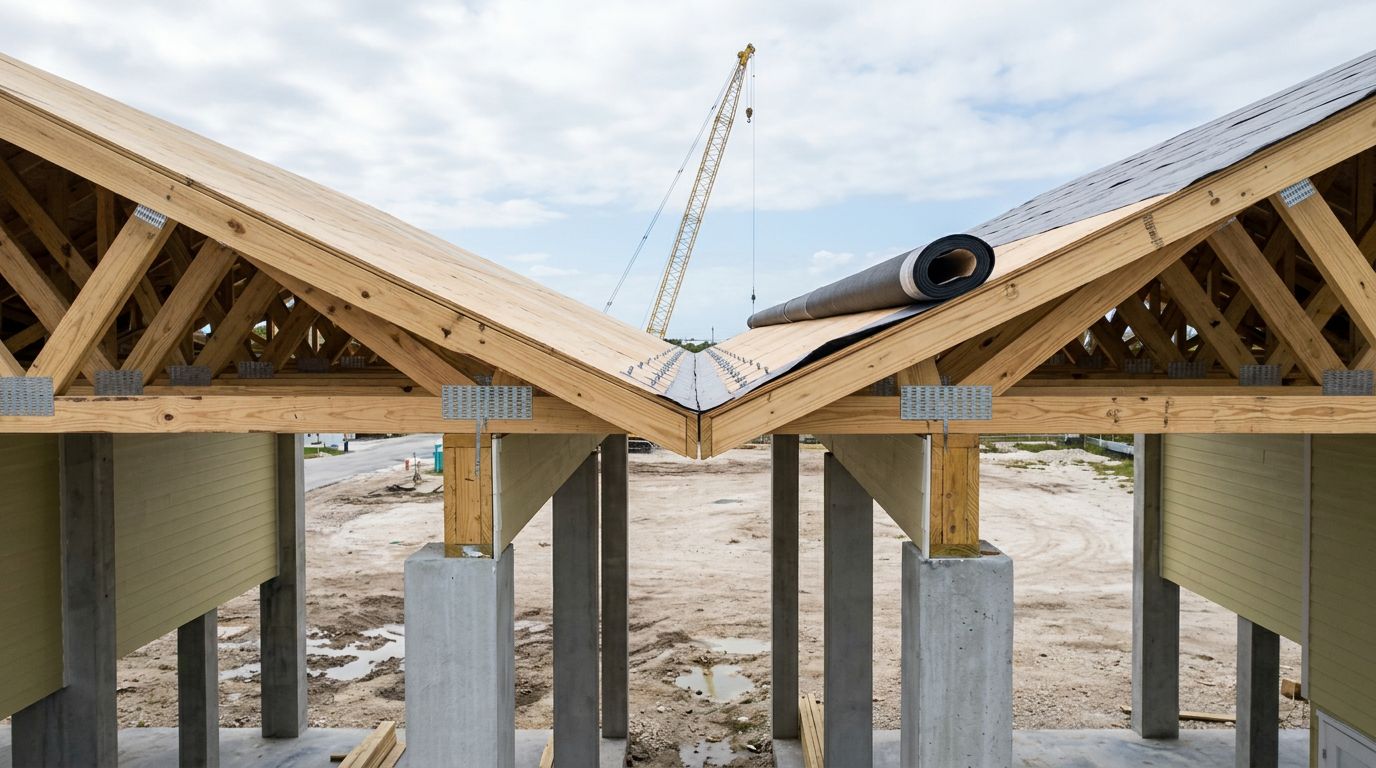
The risk increases when the crew is setting sections on columns, grade beams, or narrow supports. Workers need enough control to align the module without forcing it into place. If wind prevents precise movement, the operator may lower the section, secure it, and postpone the next pick.
The crane may be capable of lifting the module while site conditions still prevent the crew from placing it safely.
Coastal Sites Add More Wind Exposure
Waterfront construction in the Florida Keys, Fort Myers, Sarasota, and other Gulf Coast communities often has fewer barriers between the crane and prevailing wind. Narrow lots, canals, open yards, and exposed shorelines can make conditions less forgiving.
Elevated Foundations Change the Lift Path
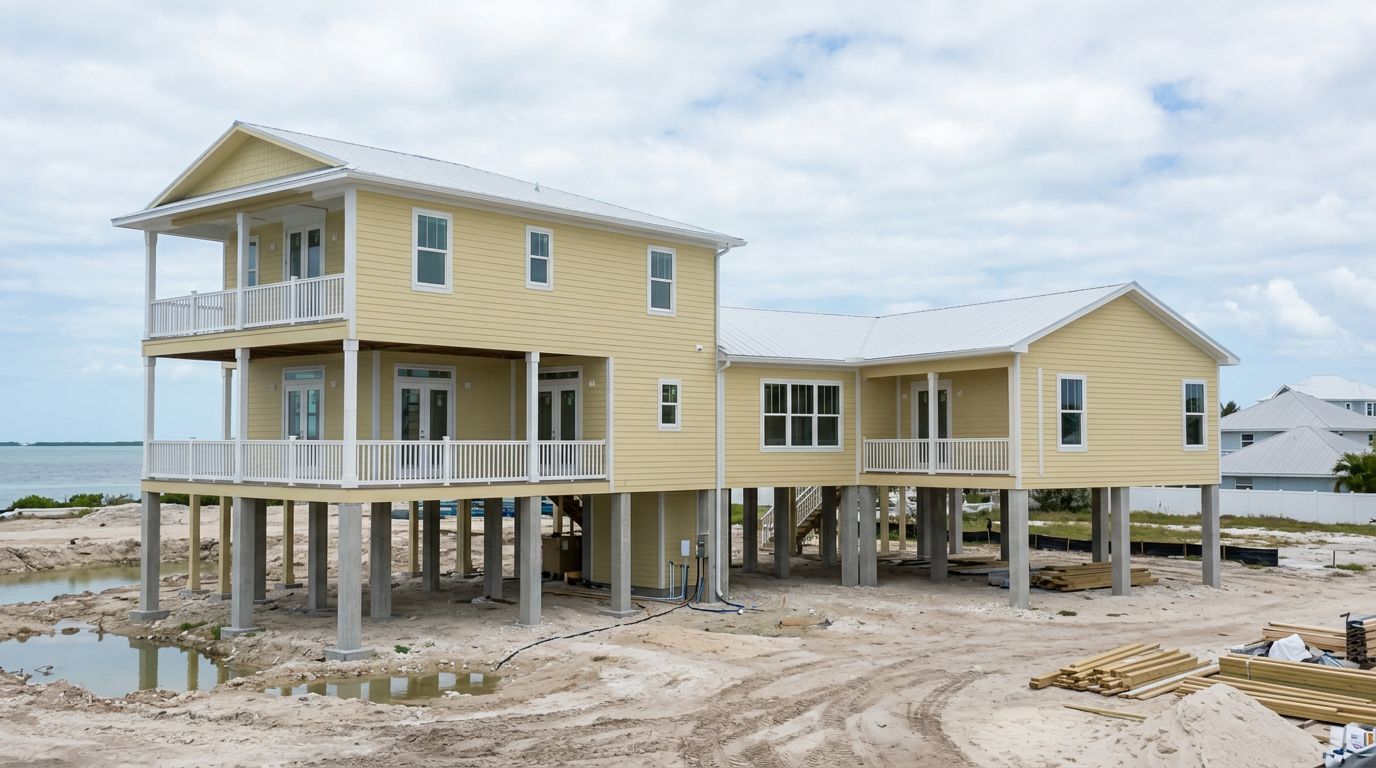
An elevated foundation can place the final landing point well above the surrounding grade. Columns, beams, and support systems may be required for flood-zone construction, but they also create a more demanding placement sequence.
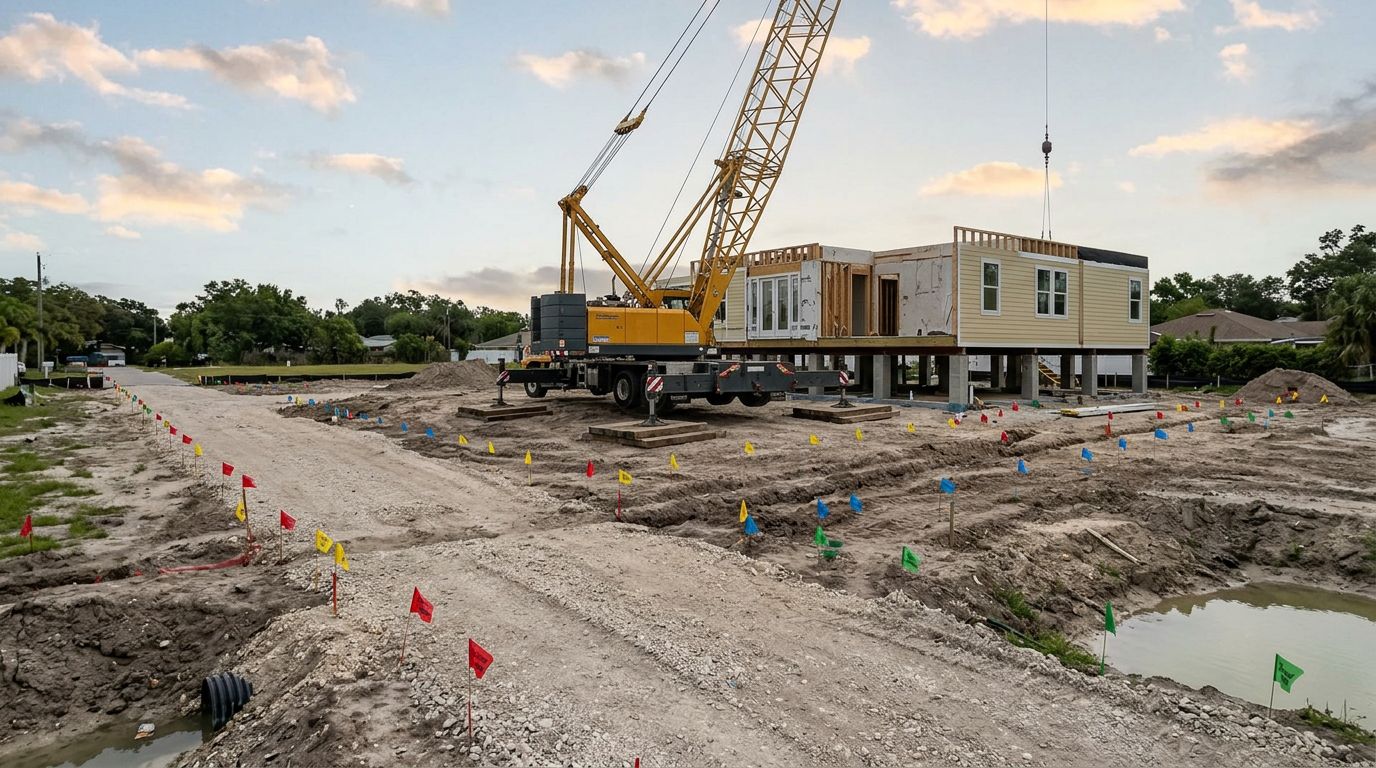
The module must remain controlled while it reaches the designed elevation. The crew then aligns bearing points, completes structural connections, and protects open areas from rain and wind. A gust during this stage can affect both placement accuracy and worker access.
The foundation itself must be ready before the crane arrives. Crews check elevations, bearing locations, anchors, access, and crane pad conditions against approved plans. A finished concrete structure does not guarantee a safe lift if the crane cannot reach it or the ground cannot support the outriggers.
Access and Surrounding Obstacles
Wind may not be the only reason a lift stops. On a compact Key West parcel, the crane position can be restricted by overhead lines, trees, parked vehicles, nearby buildings, or a narrow street. In Naples or Sarasota, waterfront setbacks and limited staging space can create similar problems.
A changing wind direction may make an otherwise acceptable path unsafe. The team may need to adjust the crane position, protect the route, change the delivery sequence, or wait for better conditions. Those changes require coordination with trucks, traffic control, rigging crews, and the site superintendent.
How Crews Prepare for Wind Delays
Wind planning begins before delivery day. A setup contractor reviews the approved plans, site survey, foundation drawings, access route, utility locations, and crane position. The team also confirms where modules will wait, how trucks will enter, and which sections must arrive first.
The lift plan should identify who monitors weather, who can pause the work, and how the team communicates a delay. It should also address what happens if the crane remains on site while conditions improve. Crane proposals may treat travel, setup, tear-down, mats, fuel charges, standby time, and rescheduling separately, so those terms need to be clear.
Before the first pick, crews inspect:
- Crane outriggers, mats, and bearing conditions
- The boom and planned load path
- Rigging, lifting points, and module restraints
- Overhead wires, trees, lights, and nearby structures
- Delivery truck access and staging space
- The foundation's elevations, anchors, and bearing locations
- Current wind, rain, and forecast conditions
If rain has saturated the soil, the crane may need additional stabilization even when wind is acceptable. Wet ground can reduce support beneath outriggers and create a separate reason to postpone the lift.
What Happens When the Lift Is Delayed?
A weather delay should trigger a controlled response rather than rushed decisions. The crane operator may secure the equipment, lower an already suspended load when safe, and wait for the approved team to reassess conditions.
The installation crew should protect exposed foundation connections and any partially completed work. Delivery trucks may need a new staging plan, especially on restricted streets in Tampa, Fort Myers, or the Florida Keys. If the delay extends beyond the planned window, the contractor must coordinate a revised schedule with the crane company, transport provider, concrete team, inspectors, and other trades.
A clear Modular Home Setup agreement should state who confirms the new lift date and whether another mobilization charge may apply. It should also explain whether temporary supports, alignment, anchoring, sealing, and weather protection remain included if the work stops after placement.
FAQ: Crane Lift Wind Conditions
What wind conditions can stop a modular crane lift?
A lift can stop when sustained wind, gusts, turbulence, or changing direction exceeds the crane's approved operating conditions or prevents the crew from controlling the module. The exact limit comes from the crane manufacturer, operator, rigging plan, and project requirements.
Can a modular home be set during hurricane season?
It can be scheduled during hurricane season if the site is ready and conditions are safe. The team should monitor forecasts, protect exposed connections, and maintain a clear postponement plan. No contractor can promise that a lift will proceed during unsuitable weather.
Who decides whether the crane lift proceeds?
The crane operator and responsible lift team make the day-of decision using the equipment limits, lift plan, current conditions, and site observations. The engineer, superintendent, and permitting officials may also need to review structural or inspection issues.
Conclusion
Wind delays protect more than the crane schedule. They protect the module, elevated concrete structure, workers, property, and the connections that hold the completed home together.
For projects in Key West, Naples, Fort Myers, Sarasota, Tampa, and other coastal communities, early planning makes a weather delay easier to manage. Confirm the crane limits, access route, foundation readiness, weather responsibilities, and rescheduling terms before delivery day. A safe lift begins with knowing when conditions are not safe enough to continue.
Recent Posts